What happens to you when you take just one slow, deep breath?
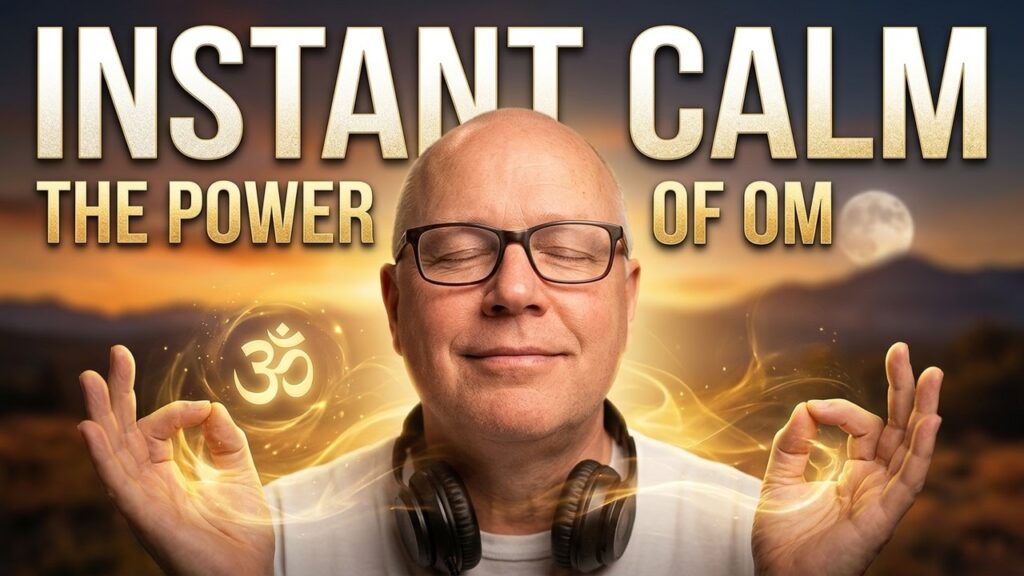
In this talk of about fourteen minutes, Hans speaks alone about breath and the practice of chanting Om. He first describes how constant notifications can keep us on edge, then moves from a single breath to chanting as a daily practice.
This is a personal reflection offered as one voice among many. It is not medical or professional advice, and chanting is not a treatment for any condition.
A sky full of signal flares
Hans compares a mobile phone to thousands of tiny signal flares launched into your personal sky. Every notification, message and endless feed draws your gaze, so the steady light of your own inner sun or moon is hard to see. He describes how this can feel in the body: shallow, rapid breathing, tension in shoulders, neck and jaw, restlessness, and difficulty relaxing or sleeping. He presents this as a general picture, not a diagnosis.
One breath
He then asks what happens with a single conscious breath. As you breathe in, you turn down the flares; as you breathe out slowly, you imagine them dimming. You notice the space between the signals, your feet on the ground, the sounds around you. Clarity, he says, is not about stopping the flares but about realising that you are the sky, not just the signals within it. He describes the breath as a gentle rain on an overstimulated nervous system, and suggests that the rest-and-digest side of the body is invited to come online.
Chanting Om
Hans notes that chanting Om is thousands of years old and rooted in Hinduism, Buddhism and other Eastern traditions, where it is regarded as the universal vibration. He says that daily chanting can bring mental clarity, emotional steadiness and, as many practitioners believe, spiritual growth. He also mentions that research is said to show chanting can lower stress hormones and ease anxiety, but he cites no particular study, so take that as a general claim.
The detail he thinks matters
The one thing he stresses is intention. In his view the practice works best when it is an act of gratitude, calling the divine source that created you “like a child calling to be embraced by the father”. If you are not ready for that, he says, do not worry, since the calming effect can still be there. He suggests just a few minutes a day and invites comments about your own experience with Om or other meditation. He ends with “Om shanti shanti shanti.”
How to read it
This article is based on auto-generated captions, so details may differ from what was said. The ideas about the divine source and the “secret” power of Om are Hans’s personal convictions. Many people chant for purely secular reasons, and other guests on this channel approach mantra and breath quite differently. If breathing exercises make you dizzy or anxious, stop and seek advice.
Questions to take with you
What would it be like to take one slow breath before you pick up your phone? What intention would you bring to a sound or word you repeat every day? A related talk on this site is Pleasure and Pain: The Friction Behind Suffering. Watch the video above and tell us in the comments what you took from it.