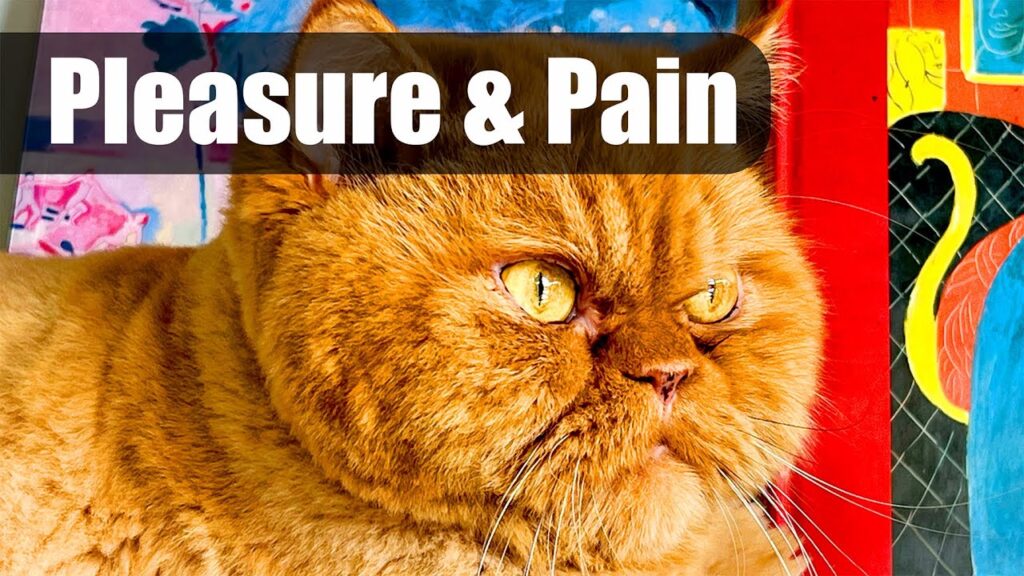
Why does the search for pleasure so often end in dissatisfaction, and why does fighting pain so often make it worse?
In this eight-minute talk, Hans looks at both sides of the same coin. Pleasure is fleeting and leaves us wanting more. Pain throws us into the present moment, which we crave to be over. In both cases, the talk argues, the real trouble is the same: friction between what is and what we think should be.
In short: Chasing pleasure and fighting pain cause suffering for the same reason: friction between what is and what we think should be. Resisting pain adds tension on top of it; relaxing into it can let it subside.
This is a personal reflection and belief, offered as one voice among many. It is not a claim of proof, and it is not medical or psychological advice. If you are in pain, please seek help from a doctor or someone you trust.
Becoming a pleasure hunter
“Life is great when we experience pleasure, though it feels unbearable when we are in pain.” The talk begins by noting that pleasure is mostly a fleeting sensation. We immerse ourselves, we are filled with joy, and then it is over too soon. From early experiences we easily turn into “pleasure hunters”: we want it all, all the time.
The cost is that we become unhappy with what is. What is is “not enough”, because we know there could be more pleasure in it. We start to generate friction in our life because we resist what is happening and crave a more pleasurable experience. We may even get angry with others, or with ourselves, because we see them as the cause of not getting what we want.
The stories the mind tells
We cannot relax because of that friction between what is and what we want. In the talk’s words, we finally decide that we “must be unhappy, born under the wrong star”, that something is wrong with us or with our circumstances. The mild form of this is boredom, a stronger form is anger, and the worst is perceiving pain through the situation. We might become depressed about not getting the pleasure we feel we deserve.
The mind then starts to create stories about why this is happening, who is responsible, and how to overcome the obstacles. Some people, the talk observes, even feel the urge to take up weapons and start “fighting against imagined monsters, hurting those who get in their way”. There is no stopping because of the identification with mind and body. If they saw that there was nothing to do, they would relax, and pleasurable moments would come back without effort. The talk’s paradox is that “the action of looking for pleasure is already creating obstacles for pleasure to arise”. The suffering is created by the urge to get away from the present moment into a future one that satisfies the craving.
What does pain do to us?
Pain is the opposite. It throws us into the present moment, one we want over as soon as possible. Hans points to a benefit: the forceful desire to be free of suffering, sometimes even of life itself, can be a trigger to change our lives for the better. We feel more inclined to a healthy lifestyle, we look for the cause of the pain and work on eliminating it, and we are motivated to take the right action.
The talk is careful here. It does not say that pain is imaginary or that you should not act on it. It says that taking the right action, such as looking after your health, is sensible. The question it raises is what happens on top of the pain: “Still we suffer. Is there a way to reduce the suffering while in pain?”
Why does resisting pain make it worse?
Pain is especially strong when we resist it. It already takes all our attention, and then on top of that we crave profoundly for it not to be happening, fight it and want it to stop immediately. “By doing that we intensify the pain. We add to it.” We take a stand, it is and we want it not to be, and the friction between what is and what should be releases energy. We feel exhausted, helpless, “losing it as they say”.
The tension shows up first in the body, as contraction of muscle tissue, “and as you might have guessed already, when doing that the pain increases”. If we could relax into the pain, the talk says, it could subside substantially.
The caveman and the fire
The picture Hans uses for mental friction is making fire with sticks. Rubbing wood against wood is how the heat starts, and it takes a lot of effort, so the person who finishes the job is most probably tired. In the same way, the heat in your mind, “igniting the fire of huge mental activity”, is very tiring too. You look for a solution, search for the cause, and start to ask who and what and why. You may create stories about bad actors in your life, people close to you who change “from friend to villain”, or blame your community, the political system, the world in general.
Not only does the physical pain increase, the talk says. Your mental pain gets bigger and bigger as well. “Only a fraction of all that pain is real. A lot of it is added in the form of a mental construct and mental tension that is expressed through bodily reactions.”
That is a strong claim, and a careful reader will want to hold it lightly. Pain can have real causes that need real treatment, and the talk itself acknowledges that. The point it makes is narrower: the layer of struggle, blame and story that we add is optional, and we can often put it down.
Letting go and asking who
The closing section turns to what to do. When you let go of your attachment to the mental activity and the false perception of yourself as the body, “the actual perceived pain diminishes”. When you stop believing your mental creations, you also let go of the urge to crave that everything be different from what is. You “open up some space between you and the pain you are experiencing”. You can relax, tension is avoided, and the muscles do not create more pain than what is already there.
The instruction is brief: “Allow what is. Be present and ask yourself, who am I?” By realising your real self, the talk says, all obstacles in life vanish, and it ends with the question that undermines them: who is experiencing those obstacles? Then: “Relax. Peace, peace, peace.”
A small experiment
You can try this the next time something hurts, whether it is a headache, a sore back or a bruised ego. Notice two layers. One is the sensation itself. The other is the “no, not this” that follows it. Soften the second layer and see what the first one does. For related reflections, see How to Conquer Chaos and Uncertainty and Embracing Mortality. Watch the full video above, and let us know in the comments what you noticed.
Key themes
- 0:02 — Pleasure is fleeting and we become pleasure hunters
- 0:43 — Friction between what is and what we want
- 1:56 — The mind’s stories about who is responsible
- 3:08 — Pain throws us into the present moment
- 4:02 — Resisting pain intensifies it
- 5:26 — The caveman and the fire of mental friction
- 6:47 — Only a fraction of pain is real
- 7:03 — Letting go, allowing what is, and asking “who am I?”