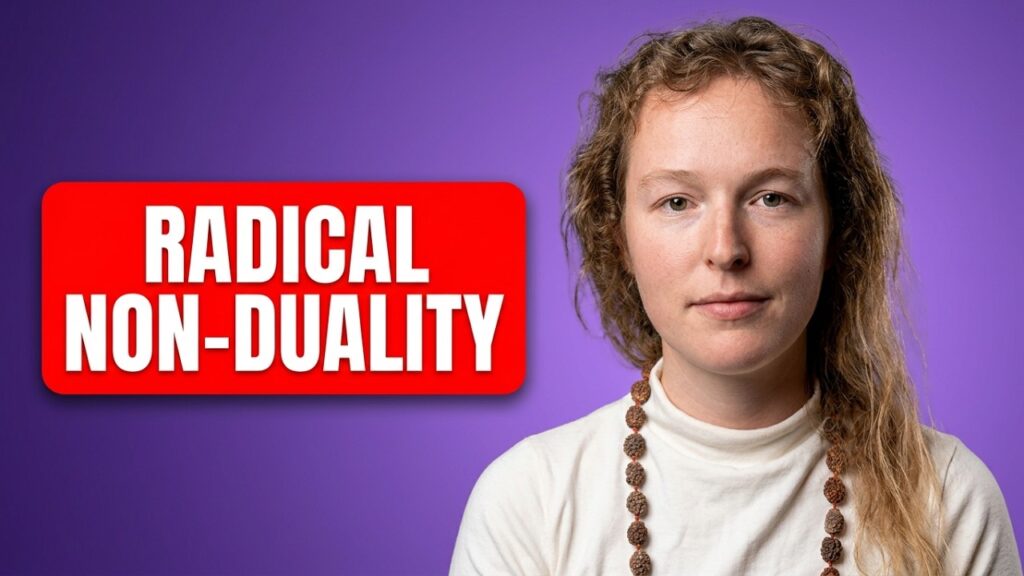
Can a teaching say “there is no one here” and still make room for breathwork, tenderness and a cup of coffee?
In this conversation of about one hour and fifteen minutes, Hans talks with Alexis, who was on the channel a year earlier. Alexis explains what has changed since then: a renewed interest in yoga, qigong and meditation, a fresh look at traditional Advaita Vedanta and the teaching of Ramana Maharshi, and a more flexible way of speaking about nonduality.
These are personal views and experiences, offered as one voice among many. Alexis and Hans speak only for themselves, and nothing here is medical or legal advice or a claim that any belief is fact.
What changed in a year
Alexis says the radical message still seems clear to him: everything speaks and moves itself. What changed is a new appreciation for what he calls the relative landscape. He began sharing yoga, qigong, breathwork and relaxation again, which he describes as play rather than a class, and later explored manifestation, noting that thoughts seem to affect the body and, through it, our surroundings. A retreat in India near the mountain Arunachala, he says, helped him see that the core of the radical message is also present in the traditional teachings.
Two ways of pointing
Alexis describes the apparent divide this way: the radical view proposes that awareness dies together with the dream of a separate self, while the traditional view says the separate self falls away and only awareness is left. He now leans toward the second, without dismissing the first. For him, attention does not disappear; it can be lovingly guided back into what he calls the open periphery of presence. He uses the image of a telescope: focusing on one thing shows perhaps one per cent of the landscape, while relaxing the focus reveals the whole view.
Yes to everything
Both speakers smile at how people can become dogmatic about a teaching of non-separation. Alexis says the purest essence of nonduality is not saying no to duality but yes to everything, the “light show”. He also says that sticking to one kind of language limited him when people in pain came to him, and that he prefers to meet each person where they are, perhaps suggesting yoga nidra for restless nights, or inquiry for someone else.
Stories, patterns and the victim role
Asked about people who feel like victims, Alexis speaks from his own experience. He suggests that such patterns often grow from needs that went unmet in childhood and become well-worn paths that attention keeps walking. Awareness, he says, can show that a path is not serving us, while not dismissing the truth in the story. He calls the ego a child that has forgotten its place rather than a villain. Hans adds that people with serious disabilities he has met were often the ones spreading love, and Alexis recalls similar joy among pupils at a special-needs school where he once worked.
Feeling, attention and everyday life
On discernment, Alexis says that no idea, not even “everything is consciousness”, is fully trustworthy, and that when we rest as awareness the heart may tell us what feels true. Attention, he says, is our most vital currency, and where it goes, energy flows. Near the end both encourage viewers to put down the screen sometimes and look for human connection, laughter and nature.
How to read it
This article is based on auto-generated English captions, so details may differ from what was said. Statements about awareness, the self and what is real are personal perspectives, not established facts, and Alexis says so himself. Other guests on this channel hold the radical view firmly, and listeners may find value in either approach or in neither. The remarks about childhood patterns are one person’s reflections, not therapy or advice.
Questions to take with you
Where does your attention go on an ordinary day, and what does it feed? Can you hold a clear view and a gentle practice together without one cancelling the other? Alexis’s earlier conversation on this site is a good companion: Alexis: I Died – The Collapse of the Separate Self and What Remains. Watch the video above and tell us in the comments what you took from it.