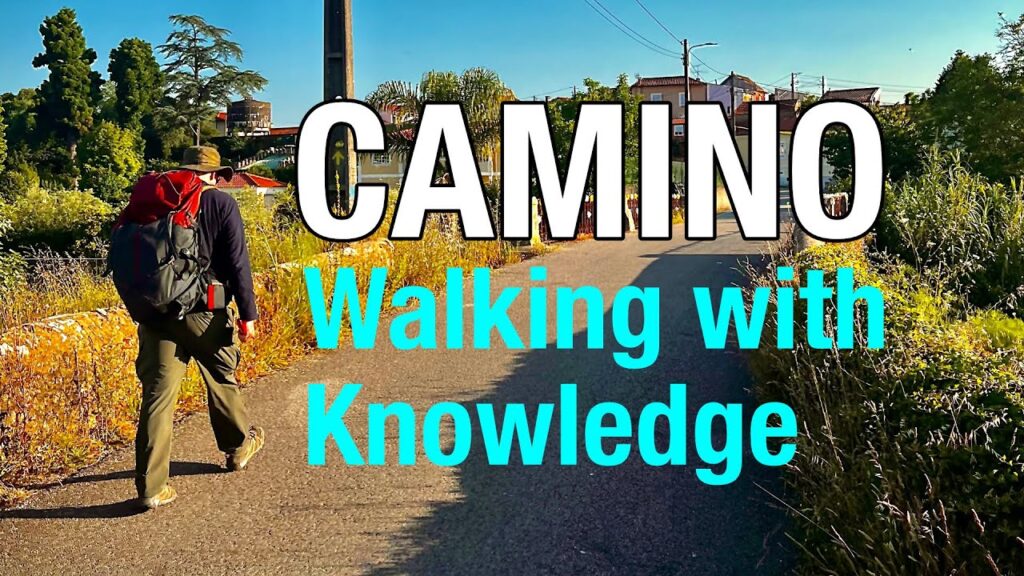
Can a walk be wonderful without needing a deep spiritual reason?
In this video of about thirteen minutes, Hans speaks with Martin from England, who started the Camino Portuguese in Lisbon, hoping to reach Santiago. He says he walks because he enjoys it, and the conversation moves to learning, teaching, languages, death and moral responsibility.
This is a personal conversation, offered as one voice among many. Martin speaks only for himself, and nothing here is medical, legal or professional advice.
Walking because he enjoys it
Martin says there is no deep philosophical or spiritual reason: he enjoys walking, visiting different countries and chatting briefly with people he meets. He did his first Camino, the Francés, the previous autumn and found it easier than the Portuguese way. Asked about spiritual benefits, he says not really. He used to be religious, and says he woke up one day and no longer was.
Knowledge changes you
He reflects that people today have far more access to information than when he was young, and that understanding something changes you, as exercise changes the body. In retirement he tried computer languages and then decided on a bigger challenge, human languages, which he started seriously during the first lockdown. He says he now does not mind sounding foolish when speaking, and enjoys chatting in several languages while walking.
Teaching maths like piano
As a former maths teacher, he says you cannot teach someone who does not want to learn. Maths, he came to think, is more like piano or tennis: the teacher can explain a little, but the pupil only improves through practice. He also suggests that understanding often comes after skill, the way children learn to speak before learning grammar rules.
Life, death and responsibility
Martin says that whether or not there is life after death, we should make the best of this life. He is agnostic about reincarnation and says it would not change what he does day to day. He believes people have a moral responsibility by virtue of being human and should not do good only for a reward in heaven; he thinks we get our reward on earth. Humans, he says, are a social animal and cooperation is in our nature. He would recommend the Camino to anyone who likes walking six hours a day, noting that people also find personal benefits along the way.
How to read it
This article is based on auto-generated English captions, so some details may differ from what was said. Martin’s views on religion, ethics and politics are personal convictions, and other guests on this channel see them differently. His main point is easy to share across beliefs: use this life well and take responsibility for others.
Questions to take with you
What would you like to learn if there were no practical reason to? Do you do good for a reward, or because it is part of being human? Related talks on this site include Why Not Live Like on the Camino?. Watch the video above and tell us in the comments what you took from it.