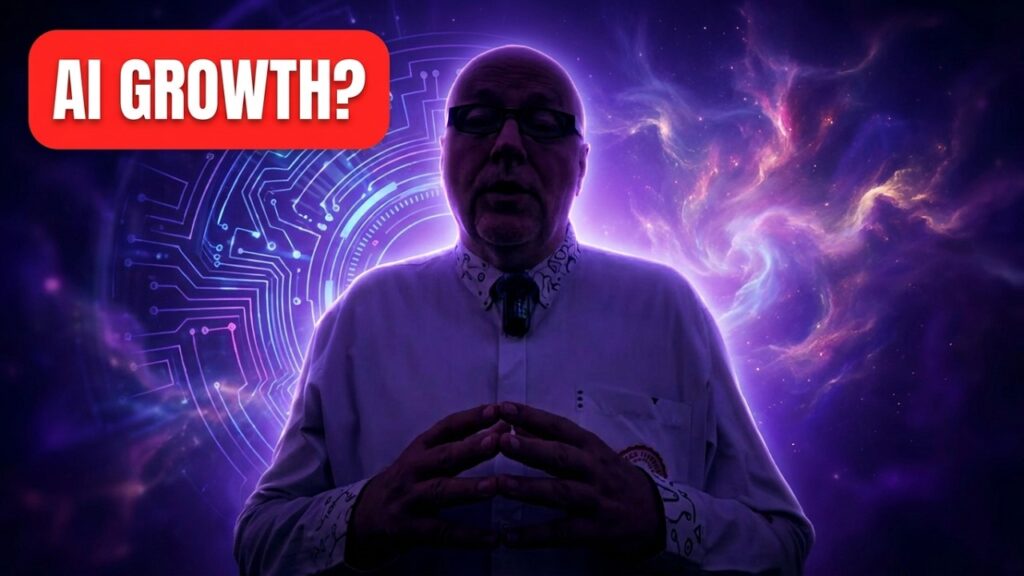
Do you want AI to help, or do you want it to do the heavy lifting and the delivery too?
In this talk of about fifteen minutes, Hans looks at artificial intelligence as a mirror. The way you use a tool like AI, he says, reflects your internal state: whether you are driven by the ego’s wish for ease or by the spirit’s hunger for growth. He talks about homework and deadlines, about “get rich quick” videos that promise effortless results, and about setting a clear intention before you reach for any tool.
This is a personal reflection offered as one voice among many. It expresses the speaker’s beliefs and is not an endorsement of any claim as fact, nor medical or professional advice.
Passenger or pilot
The central image is short: if the AI provides the answer, you are the passenger; if it provides the perspective, you are the pilot. Hans says that someone in a mood of avoidance or laziness will use AI to bypass thinking, while someone driven by curiosity can use it to expand their reach. So the first question is what you expect from the tool, and where you want to end up.
The fantasy of effortless success
He contrasts this with videos that promise you will become very rich very quickly with no effort, calling that “instant satisfaction for free” and, in his words, “a big, beautiful lie”. Real effortless doing, he suggests, comes from within, from an intrinsic realization rather than from following what others tell you. When you connect with your true nature, he says, there is an endless supply of energy, and even large efforts do not feel like effort.
Intention before the tool
For a student who only wants the homework finished, Hans argues the intention points the wrong way. If the aim is a grade or avoiding effort, the outcome will not serve you; if the aim is to learn, then critical thinking and a deeper grasp of complex ideas are the real goal. He also admits that deadlines pile up from procrastination and that, once you have created a cause, you may have to live with the effect, which he calls nature’s law. His advice is to be clear about your own motivation instead of living only on the expectations of family, friends or school, and to work with your circumstances rather than against them.
Small steps, human help, and excitement as a compass
When a task feels too big, he says, AI can help chop it into little pieces, but “the machines do not feel for you”: you still need to feel confident yourself. Small achievements bring a good feeling that fuels motivation. He encourages accepting help from people who have walked the path already, and warns that the ego will insist it knows better, a trap we all learn from. Finally he describes divine energy as water taking the path of least resistance, with your excitement about your personal goals as its gravity. His closing line is “Follow your bliss.”
How to read it
This is a values-based reflection, not a study of how people use AI, and the talk does not cite research. Phrases such as “divine energy” and “place your desires at the feet of the Lord” come from the speaker’s spiritual outlook and will land differently depending on your own. The practical core can be tested by anyone: name your intention before opening the tool, ask it for perspective rather than finished answers, and notice whether your use leaves you more capable or less.
Questions to take with you
Where in your life are you the passenger, and where are you the pilot? What would you actually like to learn from the task in front of you? Related talks on this site include Climbing the Mountain of Knowledge and Is AI Dumbing Us Down?. Watch the video above and share in the comments how you use AI.