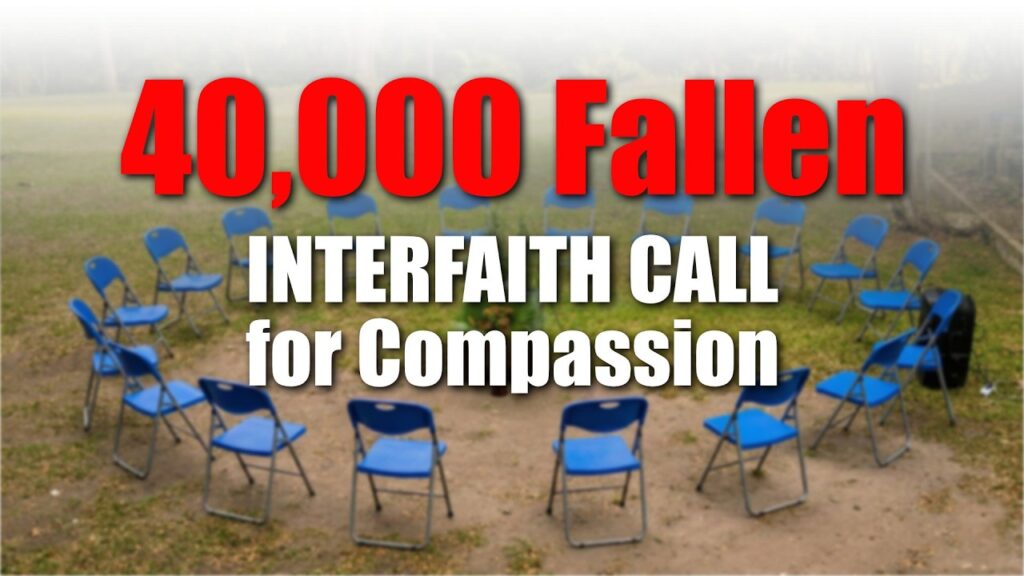
Can people of different faiths stand together when the world feels torn by conflict?
This 26-minute recording captures an interfaith gathering of prayer for peace. Christian, Muslim, Bahá’í and Buddhist participants, along with students and friends who do not name a religion, come together around candles to read from their traditions, to remember people suffering in war and violence, and to commit themselves to peace, understanding and compassion. Hans Hansen of Talking to Source was there to listen and record.
What follows is a summary of what the speakers said at the gathering. Figures and events they mention are their own statements, not findings of this site. This is not political, legal or pastoral advice.
A gathering at a turning of the calendars
The organiser opens by noting that the day falls on Ash Wednesday, that Ramadan begins the next day, and that the Bahá’í new year and fast are close as well. Representatives of several traditions are welcomed, including divinity students, Bahá’í participants, Muslim friends, a university Islamic association and Buddhist representatives. People who do not identify with any religion are welcome too. The aim, the organiser says, is to lift up the world, remember those living where war and suffering are present, and seek love and peace.
Scripture from many traditions
The readings include a Bahá’í passage on dealing with one another “with the utmost love and harmony” and on the light of unity, a Buddhist discourse that asks what causes conflict and answers that attachment and fixed views are at its root, the Christian text from Romans 12 on sincere love and living at peace with everyone as far as it depends on you, and verses from the Quran about humanity created from a single pair so that people may know one another. A psalm about God’s people living together in unity follows. A large central candle stands, the organiser explains, for the one source of life, whatever name each tradition uses for it, with four smaller candles for the four directions of the earth.
The pinch test and the poem of Sa’di
One speaker invites everyone to gently pinch their own arm and notice that the whole body responds to a small hurt. He then reads the well-known lines of the Persian poet Sa’di: human beings are members of one body, and if one member is in pain the others cannot remain at ease. In his view, a growing unease about the suffering of others is a sign of life and of a collective consciousness, and faith can be the light that awakens it.
Iran, and a request to look for yourself
The speaker then turns to Iran. He says that in two days about 40,000 young people were killed, and that many more were injured, and he asks listeners to keep them in their prayers and to read for themselves what happened. He asks for anger that does not turn into violence: to be a voice for the voiceless without replicating what the perpetrators did. He also tells, in a few sentences, that he left Iran at sixteen after being barred from school because of his faith.
When religion becomes ideology
He warns that any set of ideas, religion included, can harden into an ideology that people will fight over, and suggests that if Christianity could be reduced to one word, it would be love. Faith, he says, is about relationship rather than agreement on a list of ideas, and anyone who hides behind faith to do harm makes things doubly worse.
Prayers, and the passing of the candle
Prayers follow in the Bahá’í, Christian, Muslim and interfaith traditions. They ask for a pure heart, for wisdom and clarity, for kindness to answer hatred, for justice and humility in those who lead, and for peace in Iran, Palestine, Ukraine, the Middle East and Africa. A Muslim speaker prays that “with hardship comes ease” and that trust in God will strengthen rather than fade. The evening ends with everyone passing a lit candle from hand to hand and exchanging the greeting of peace.
How to read it
This is a spoken community event rather than a news report, and the numbers it mentions deserve care. The figure of 40,000 deaths is the speaker’s own. Public reports on the January 2026 protests in Iran differ widely: Iranian state media reported an official count of 3,117, while other sources and rights groups have cited far higher estimates, and many details remain disputed and hard to verify. We have not been able to confirm the number independently, and it should be read as one voice among several. What the evening offers is less a statement of facts than an example of how people of different faiths choose to grieve together, and to answer pain with prayer and presence.
Questions to take with you
Where in your own life would you feel the “pinch” of someone else’s pain, and what small action could follow? How might your tradition, or your own sense of what is sacred, hold both anger at injustice and a refusal to hate? Related talks on this site include Interfaith and Peace: From the Silk Road to Chiang Mai. Watch the video above and tell us in the comments what you take from it.