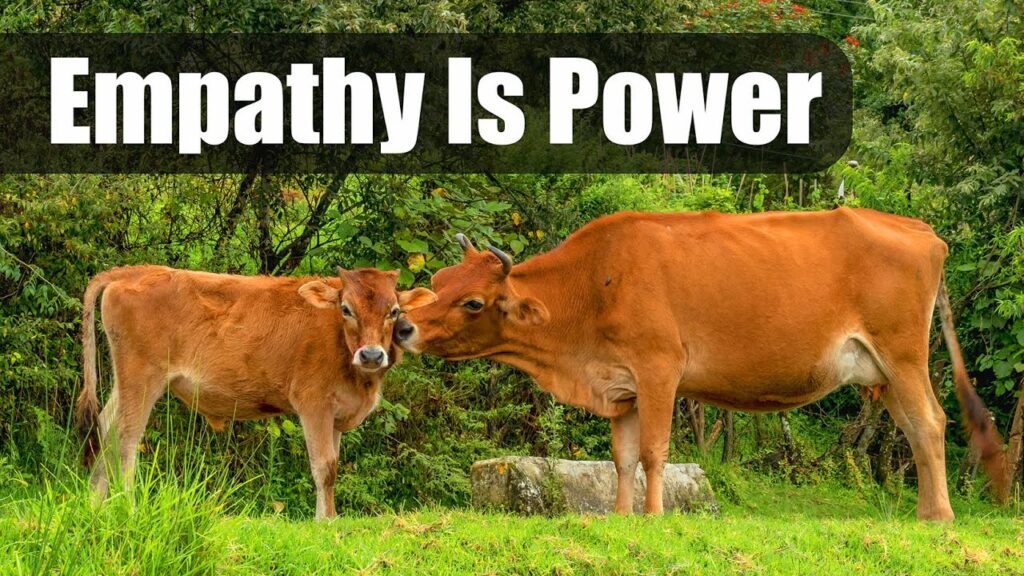
If consciousness can see everything except itself, how could you ever get a look at your own?
That is the puzzle at the heart of this short talk, which Hans delivers in the first person as an audio message. It starts with the bold statement that “all existence is vibration”, moves through resonance, sound and the apple that falls in an empty forest, and arrives at a very practical place: how you treat the people who annoy you. In under fifteen minutes it argues that empathy is not just a nice quality but a way of recognising who you are.
This is a personal reflection and belief, offered as one voice among many. It is not a claim of proof, and not medical or psychological advice.
All existence is vibration
The talk begins with “we are one”, and the reminder that this audio is for the listener “as it is for me”. Everything that exists is in continuous movement, it says: some vibrations are big and some small, denser or lighter, faster or slower, but “nothing does not vibrate”. A physicist, Hans notes, could explain this about physical objects, but the same is observable in non-physical realms. Our thoughts are in constant movement, and even the awareness that allows us to be conscious of our surroundings is “experiencing constant change”. Staying focused on one topic for long is an achievement, and even the most trained mind eventually has to let go because of the body’s limits.
A net, not a void
Nothing, the talk continues, moves separately. “All existence is closely knit in an infinite net of physical and non-physical matter.” That is why you can have a feeling about a person who is not in the room, or a premonition before a reunion, or the experience of someone telling you they were just thinking of you. The suggestion is that this is not mere coincidence but a vibrational connection “that isn’t bound to time and space as we think we know it”.
The metaphor is a guitar string. Strike one end and the movement travels along the string, to the instrument’s body and into the room. Hans invites listeners to try an experiment: think of someone you know in a deliberate way, hold the focus as long as possible, repeat it, and watch what happens. Perhaps you will feel the urge to call them, or they will contact you first, or a week later they will mention they were thinking of you. It is offered as something to test in your own experience, not as a proven fact.
The apple and the observer
Then the talk takes a more philosophical turn. When an apple falls from a tree and thumps on the ground, did it make a sound if nobody was there to hear it? The talk’s answer is that the vibration is just vibration, and “it is you who converts it into something audible called sound”. Your sense organs translate vibrations into experiences, and consciousness acts through you as the experiencer. So there is “no separate event possible”. Every vibration is connected to everything else, and that is “precisely what enables us to connect to other beings through time and space”.
Part of the magic, according to the talk, is the natural law of resonance: something close to your own vibration is easily triggered, just as a plucked string carries along its whole length, even a mile-long one. So when you think of someone, “there is something subtle happening over there”. The listener is invited to stay open to the idea even if it seems crazy, and to ask the important question: are you conscious of your own thinking?
Consciousness cannot see itself
The central image arrives about nine minutes in. Consciousness, Hans says, is like the apple of your eye. It can look into the external world and see everything, but it is never able to see itself. Even when you look at your own eyes in a mirror, what you see is a reflection. So how can we perceive our own consciousness?
The talk’s suggestion is: “It might be through empathy that we get a glimpse of our own consciousness.” Judging someone is an active movement from the inside out, reaching to the world around you. Empathy for the other being’s point of view gives you the option of turning that person into a mirror that looks into your own consciousness. In empathy with others, you can “experience and broaden the recognition of your own consciousness”.
Empathy or projection?
The talk adds a warning. Be vigilant not to mistake projection for empathy. We can project our own demons onto the outer world, and everything we perceive can become the screen for our delusions. Our own failures and shortcomings are easily seen in the behaviour of others. The faults we see in others, the talk says, “are actually your own limitations”: you can see and judge them because you hold the same vibration in yourself. Their behaviour triggers, through resonance, an unwanted experience in your own being, and that is why we get so emotional about others and, ultimately, about ourselves.
This is a bold claim and not every reader will accept it as a general rule. As a practical test, though, it is hard to beat. If a comment hits a nerve, the talk says, that is a sign the person is in front of you for a reason, and “if it triggers a strong feeling in you there is a lesson to be discovered”. And if something hurtful makes no impression at all, that is because “there is nothing in you that resonates with it”.
The mother and the child
How does empathy work in practice? Hans offers the picture of a mother whose child is upset about external events. She forgives the child’s emotional overreaction easily, because she has loving empathy for her child. “It is the love for a child that enables her empathy.” Without love, he adds, many beings would not survive their upbringing, since some parents would quickly distance themselves from their little ones, leading to abandonment and absence of care.
Empathy means putting yourself into the feelings and perceptions of another so that you understand how they feel from their point of view. It leads, the talk says, to “instant forgiveness”. You grasp what moves them and why they behave as they do, and so you have no need to defend yourself or intervene in their behaviour. You may offer help by showing compassion.
Boundaries are not a lack of empathy
It would be a misreading to take this as an instruction to let anyone walk over you. The talk is explicit on the point: “No one has the permission to run over your feelings or your physical being like a bulldozer. You have the absolute right to stop them.” But the first option, it says, is how you react, and empathy makes that reaction “more human”. Be kind and open, and you become “the trigger for change”.
Start by being kind to yourself
The closing minutes are a short list of practices. Start by being kind to yourself first. Accept that you judge others, and be aware that the people you judge reflect your own shortcomings. Have love and empathy for those who judge you, “they don’t know better because they have the exact same problem when they are unaware of their judgments”. Be kind when critical comments hit a nerve. We are on this planet to learn from each other, so take the free lesson, reflect on it and change for the better.
The last lines tie it together: empathy leads to compassion, compassion leads to peace, and peace can be found with others and with yourself. “Love yourself so you can learn to love everyone else as well, because we are one.”
A question to take with you
You do not need to share the talk’s view of vibration to try its practice. The next time someone irritates you, ask what it is in you that resonates with the irritation, and then picture the situation from inside their point of view. Does the charge change? For a related reflection on judging less and learning more, see Notes to Self: A Short Reflection on Life’s Purpose, and for the moral side of the same theme, Does Morality Really Matter in Today’s Society? If this talk speaks to you, watch the full video above and tell us in the comments what came up.
Key themes
- 0:01 — “We are one”: all existence is vibration
- 1:45 — An infinite net of connection beyond time and space
- 2:45 — The guitar string and an experiment to try
- 5:14 — Does the falling apple make a sound?
- 7:08 — Resonance and the natural law that connects us
- 9:08 — Consciousness cannot see itself, except perhaps through empathy
- 10:27 — Projection versus empathy
- 11:21 — A mother’s love, forgiveness and boundaries
- 13:02 — Be kind to yourself first: “because we are one”