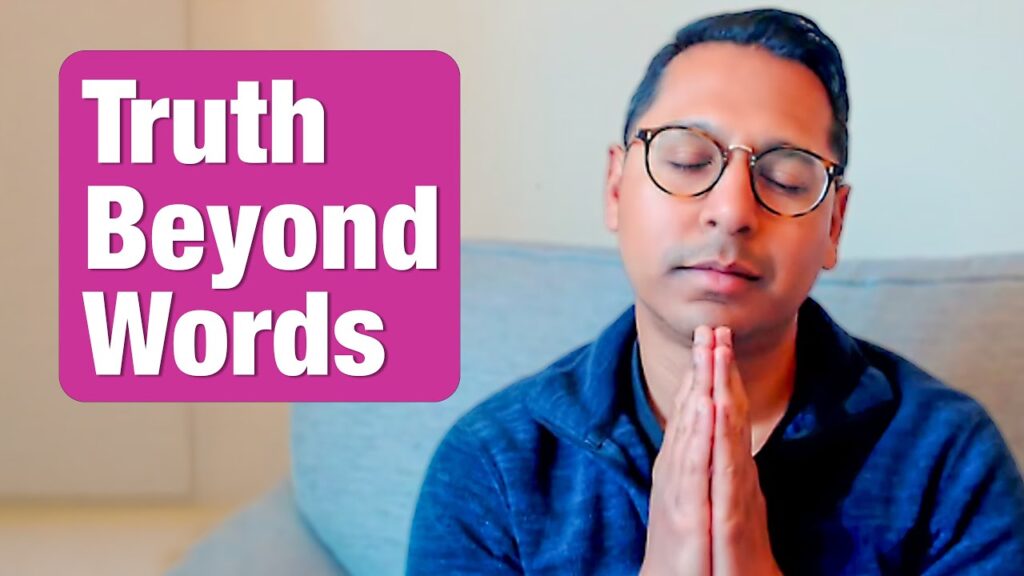
Can you fall in love with a teacher who died before you were born?
In this conversation of about seventy minutes, Hans talks with Tom Das, who shares teachings on self-realization. Tom describes his path from a curious boy in the UK to a teacher who says love for Ramana Maharshi changed everything. They also talk about how to choose a teacher, stillness, suffering and interfaith dialogue.
These are personal stories and beliefs, offered as one voice among many. Neither speaker offers medical, legal or professional advice, and each speaks only for himself.
A seeker from childhood
Tom says he grew up in the UK with parents from India, was fascinated by science, mathematics and mystics of all kinds, and was taught yoga and meditation by his mother. He explored Hindu and Buddhist traditions, Christian mysticism and New Age ideas, and worked as a junior medical doctor. When he first met the teachings of Ramana Maharshi, he says, he rejected them as too far from his conceptual mind.
Love he did not plan
A couple of years later, something shifted. Tom says he still disliked the tone of the books, but felt an intense love and devotion toward Ramana, whom he calls Bhagavan, a title of respect. He had wanted a teacher to teach him, “like French or guitar”, not someone to love. Ramana died in 1950, so Tom’s mind suggested it was imagination or projection. The feeling, though, seemed pure, and he decided to go with it. He now attributes his realization to that unfolding in his heart, and describes it as grace that came into him and “took” him.
Training wheels and the teacher within
Asked about teachers, Tom says the teacher is within us, but an outer teacher can help us find that, like the stabilizers on a child’s bicycle. He warns that attraction to a person brings a risk of abuse, so keep your mind switched on. His pointers: go to the teacher you are drawn to, but check whether they emphasise their own personality and looks. He describes the heart as the sail and the intellect as the rudder. On devotion versus knowledge, he says they are ultimately one, though people enter by different doors.
Advice, humility and each person’s path
When Hans worries about giving unrequested spiritual advice, Tom suggests being yourself, preface advice with “this is my experience”, and admit when you do not know. He says he is not responsible for what others do with his words. He mentions that Ramana, asked by another yogi what to teach on a tour, said no single teaching fits everyone. On the idea that you can help everyone wake up, Tom says that, from his view, the self knows itself and that when you wake up “everyone wakes up”, so there is no need to rescue others. Hans, for his part, holds a more “bliss-following” view, and Tom describes how following joy can mature into peace.
Interfaith and listening
On interfaith dialogue, Tom says it depends on a shared value that every person has inherent worth, linked to the principle of ahimsa, or non-harm. Hans shares how walking a pilgrimage between religious places in Chiang Mai led participants to become friends, and explains why the channel is called Talking to Source: in every person he is talking to the same source. Tom closes by inviting people to his online meetings and website.
How to read it
This article is based on auto-generated captions, so names and details may differ from what was said. Claims about grace, realization and everyone waking up are personal convictions rather than established fact, and speakers on this channel sometimes disagree. The idea of souls choosing suffering, which Hans mentions, is his belief and should be treated gently, since suffering is real for those living it.
Questions to take with you
What qualities would you look for in a teacher, and what would make you cautious? Where in your life are you using training wheels, and are they still helping? A related talk on this site is Is “Waking Up” Enough? Swamini Brahmaprajnananda on Advaita Vedanta. Watch the video above and tell us in the comments what you took from it.