What would change if you spoke your truth first to yourself, in a mirror?
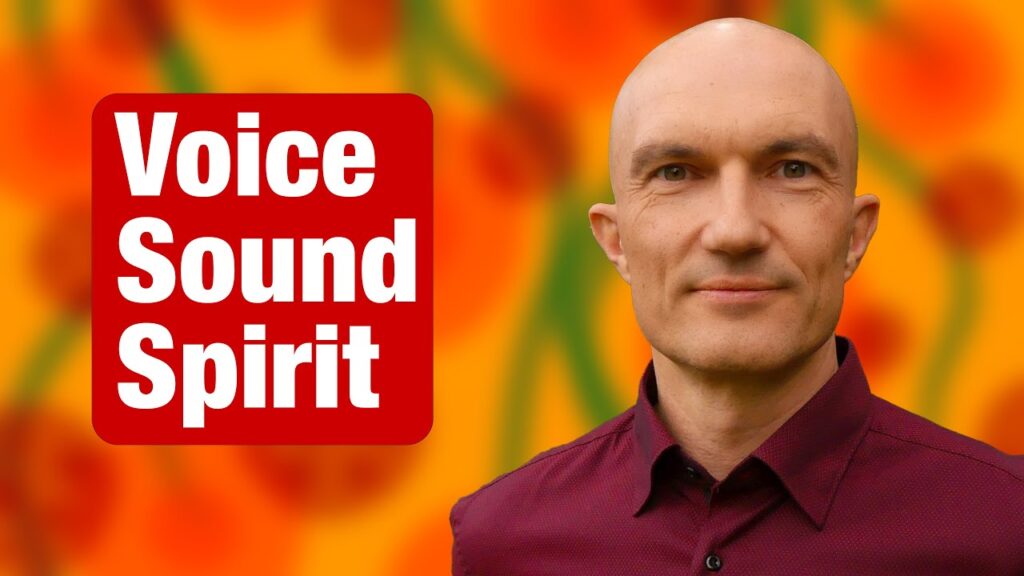
In this conversation of about thirty-one minutes, Hans speaks with a musician and voice coach, a guest who says he has been on stage for fifty years since the age of seven, plays the violin and has taught workshops on overtone singing and Nada Yoga for twenty-five years. He demonstrates overtone singing during the talk and speaks about voice, technology, silence and what he calls the voice of life.
This is a personal summary of one guest’s views, offered as one voice among many. The exercises and ideas are shared for reflection, not as medical, psychological or therapeutic advice.
Sound as a path
The guest explains Nada Yoga as the yoga of sound, which includes the many levels of sound and also our attachment to it, from the start of life to the end. He sees sound as an expression of the source of life, and says we learn about living together by sounding together. He describes harmony and dissonance as a dance between polarities: harmony is restful for meditation or a retreat, but music, like life, also needs dissonance to move to a new harmony.
Finding your own voice
He suggests that our personality was shaped largely through voice, both the voices of adults and our own inner voice, and that a single sentence from an authority figure can silence someone for years. In his coaching, he says, he meets many people who were forbidden to use their voice. His simplest first step is to speak your truth about your life, first to yourself in front of a mirror, later to friends and partners, and to take it one small brick at a time, starting with the one that has bothered you longest. A voice that conflicts with the inner truth, he says, shows the conflict in its sound.
What overtones are
For those who have never heard of overtones, also called harmonics, he uses the image of a ladder between earth and sky. Every natural sound contains steps above the fundamental note, and the strength of each step is part of what makes a voice individual. An overtone singer learns to bring out one or two of these steps and shape melodies from them. He then demonstrates it, and says the training is also one in focus. He adds that, in his view, overtones are perceived on the right side of the brain and the fundamental on the left.
Technology, silence and the first encounter
Asked whether technology will save or harm us, he compares it to fire and knives: useful and dangerous, requiring conscious use. He worries that compressed recordings lose parts of the sound and recommends balancing technology with live music and nature. On stillness, he says that focusing deeply on a rich sound leaves no room for thinking and opens a door to silence. He first heard overtone singing on a recording of a Tibetan monk in 1991, learned the technique within hours and cried with joy, and he connects this to a feeling of a former life as a Tibetan monk.
Death and the next step
When Hans asks about death, he says that vibrations change when we leave the physical body, and that dying people can be helped by music and words that guide them towards the soul. He ends with a line from a poem of his, that now is the moment you are born and die at the same time, and invites listeners to ask: what is my next step back into my own nature?
How to read it
This article is based on auto-generated English captions, so some terms and details may differ from what was said. The guest’s views on past lives, the brain, the voice of life and the dying process are personal convictions, not established facts, and other guests see them differently. The guest is not named in the captions, so he is described here only by what he says about himself.
Questions to take with you
What is the one thing you have never said out loud, even to yourself? And what sound, such as a song, a hum or a bell, helps you become quiet? A related story on this site is Knut on Tuning an Albergue to 528 Hz. Watch the video above and tell us in the comments what you took from it.