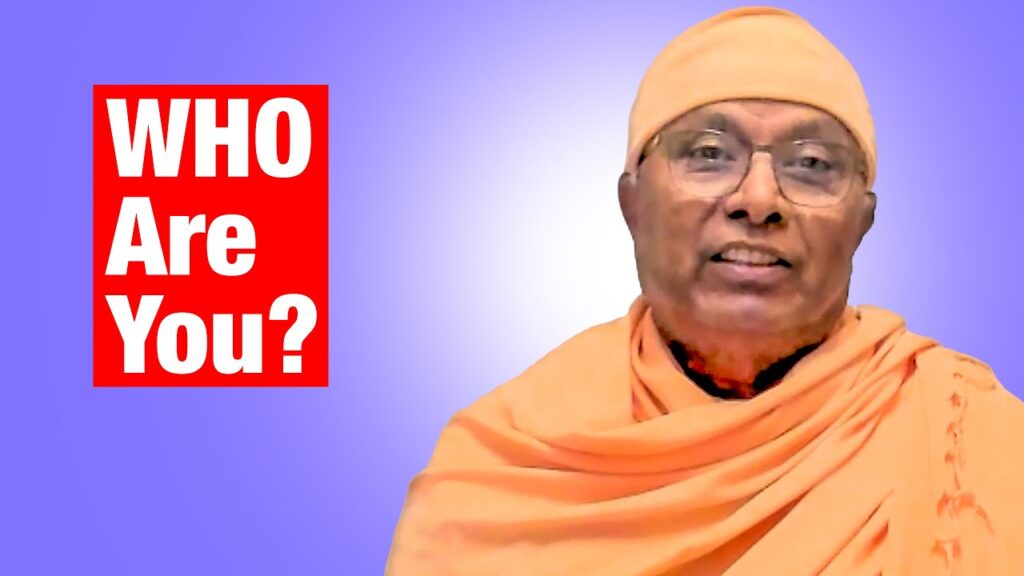
Why should anyone care about spirituality at all?
In this video of about twenty-three minutes, Hans speaks with Swami Baneshananda, who says he leads the Vedanta Society in Berlin, a branch of the Ramakrishna Order. He explains the idea of Advaita, or nonduality, makes a case for spiritual practice, and speaks about interfaith harmony. Most of the talking is by the Swami.
These are personal beliefs from one tradition, offered as one voice among many. Nothing here is medical or professional advice, and the Swami speaks only for himself.
A monk’s path
The Swami says he joined the order as a novice, trained as a monk for nine years, studied scripture and comparative religion, and served tribal communities in northeast India for nine years. He edited an English monthly of the order for three years, and came to Germany in 2004 to establish a permanent centre. He mentions that he is around seventy years old.
Nonduality in a sentence
He describes Advaita as the culmination of the Vedic tradition: from crude early religion toward an inner search and the discovery that there is only one infinite reality. It does not mean “many are one”, he says, but that there is nothing other than one. What we see as many is relative experience. He also explains the word “spirituality” through the Sanskrit idea of the indwelling self within the body, which he calls the container.
Why care?
Spirituality, the Swami says, addresses basic needs for peace, purpose and belonging. He notes that studies suggest spiritual practices can reduce stress and support mental and physical health, and that it fosters empathy and responsibility for others and the planet. He ties it to the question “Who am I?”, which he links to what makes us homo sapiens, the wise. A life with a goal is measured on a different scale from a life of passing time, he says. He also remarks that intellectual information, such as what patients read on the internet, does not replace practice.
Practice makes it your own
Meditation, prayer, mindfulness, reflection and acts of compassion are named as practices that build emotional resilience, ethical growth, focus and a sense of connection. He tells a story attributed to Sri Ramakrishna about milk: one person writes a thesis on milk without ever seeing it, another has seen it, a third has drunk it, and yet the drinker is nourished in ways he does not know. Spiritual life, he says, is like that, and it keeps him going.
Religions talking to each other
On interfaith, the Swami says other religions have no need to adopt nonduality, and he does not expect them to. But religions should talk, learn from each other’s saints and values, and not quarrel, so that neighbours of different faiths can feel like neighbours. He points to the saying “love thy neighbour as thyself” and says his order draws on many traditions while following its own path. He invites visitors to contact the centre in Berlin.
How to read it
This article is based on auto-generated captions, so some Sanskrit terms, names and details may be misspelled or differ from what was said. The talk presents a Vedantic view; other traditions, including some guests on this channel, understand the self and the divine differently. The health claims are general and attributed to the Swami, not medical advice.
Questions to take with you
What is the difference, in your own life, between knowing about something and having tasted it? How could you listen to a neighbour of another faith this week? A related talk on this site is Interfaith and Peace: From the Silk Road to Chiang Mai. Watch the video above and tell us in the comments what you took from it.