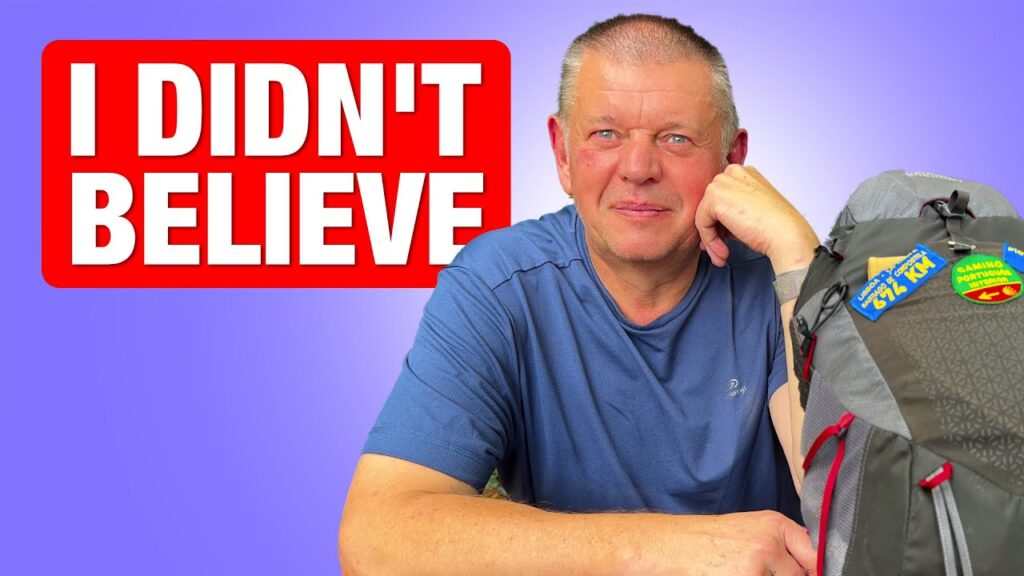
Have you ever dismissed something as madness, only to find yourself doing it a couple of years later?
In this interview of about seven minutes, Hans talks with Igor, a pilgrim who says this is his first classical Camino on the French route after earlier walking the Portuguese way from Lisbon. He tells how he went from wondering what kind of people walk hundreds of kilometres to becoming one of them, and about a moment in Santiago that he says felt like more than chance.
This is one person’s account of his own experience, offered as one voice among many. Whether such moments are coincidence or something more is left open, and nothing here is medical or legal advice.
“What kind of crazy people?”
Igor says that when he first heard of the Camino he thought it was incomprehensible: “I would never ever do anything like that.” Two years later he walked from Lisbon to Santiago de Compostela. In his words, he became one of those “crazy people”. When Hans asks what happened, he says one day he simply felt that he wanted to do it, and that the wish grew stronger until he bought a one-way ticket to Lisbon.
Unprepared, but hooked
He describes setting off with no real idea of stages or what to take. He says he had tried a few training walks of twelve to fifteen kilometres with a backpack and found them “living hell”. Still, he liked the Camino and could not stop thinking about it afterwards.
The people on the way
For Igor the first thing about the Camino is the people. He says he was alone for most of the stretch from Lisbon to Porto, on uphill and downhill paths with many stones, and thought that if something happened he could lie there for days. After Porto, he says, he found a group: two men from Italy, one from Germany, two women from Texas, a Suzanne from France and another from Holland, “people with the same idea and the same spirit”.
A call in the square
Asked whether anything spiritual happened, Igor says it is hard to tell, but one thing did. On his second Camino, starting from Porto, he walked in seven days instead of the usual nine. As he stood in the square in Santiago, he says, he got a call that his mother had suffered a serious heart attack. He went inside and, saying he does not know how to pray properly, simply asked, not for himself but for her. He thanks the emergency doctors and says the team was excellent.
Igor does not claim to know what the timing meant. “Can you call it coincidence? Maybe. I don’t know. For me it wasn’t.” He points out that he arrived two days ahead of schedule, at exactly that moment. What changed for him, he says, is not an opinion but a feeling: “deep inside I definitely feel it.”
How to read it
This article is based on auto-generated English captions, so spellings and some details may differ from what was said. Igor’s sense of synchronicity is a personal conviction, and others, including guests on this channel, would explain such moments differently. We do not know how his mother recovered, and the story should not be read as a claim that prayer changes medical outcomes. What may ring true for many listeners is that a hard moment can leave a feeling that is hard to put into words.
Questions to take with you
What did you once dismiss that you now understand better? Has there been a moment when you found yourself praying, or wishing, for someone else rather than yourself? Related talks on this site include A Pilgrim’s Wisdom: Simon on Connection, Crisis and the Fear of Death. Watch the video above and tell us in the comments what you took from it.