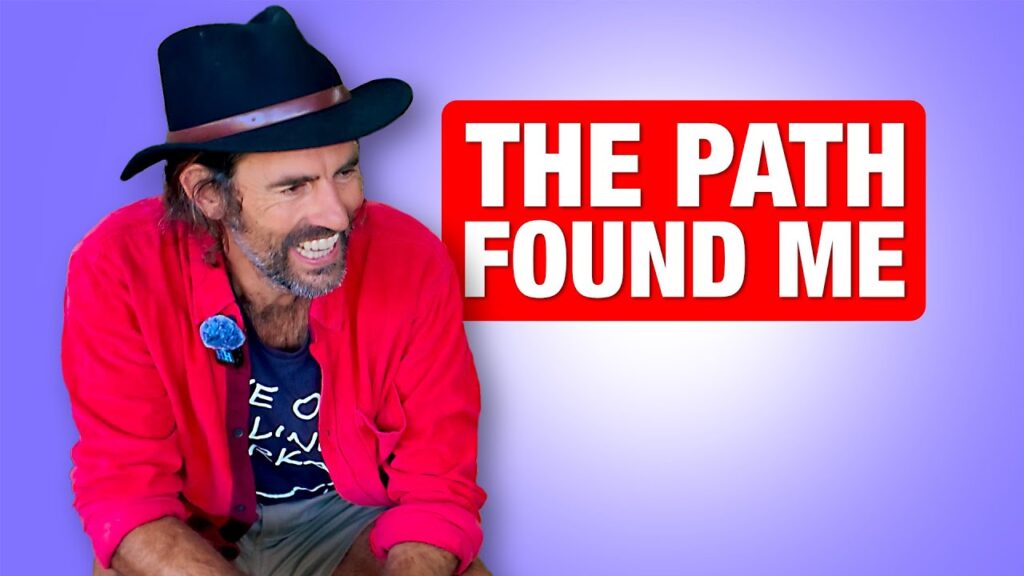
What are we all really looking for when we walk, work and wander, and what changes when we stop and simply feel it?
In this video of about twenty-six minutes, Hans sits down with Simon, who has spent more than ten years living and serving pilgrims beside a labyrinth of quartz stones on the Camino de Santiago. They talk about connection, why crisis can wake us up, gratitude, the fear of death, and what it means to trust yourself.
This is one person’s account of his own experience and beliefs, offered as one voice among many. Nothing here is an endorsement of any belief as fact.
The labyrinth and the teachers on the path
Simon describes the labyrinth as a place created to listen to the earth and make room for healing, transformation and connection. After more than ten years of accompanying people on their inner journeys, he says the thousands of pilgrims who walk past each day are, often without knowing it, teachers. They show him parts of himself, if he is alert enough to see them.
What we are looking for
His answer is connection, a deeper one, and he suggests that the Camino, like life, is a search for it. Sometimes we look for it in ways that do not support us, such as substances or distractions. He does not call these good or bad; he says they mirror why we choose them, and invites us to ask what our relationship with anything really is. Then he asks a bigger question: why do anything at all? We are given this life, he says, and even moving a finger is a quiet miracle we take for granted.
Presence, and a healing that just happens
Simon calls sharing presence with another person one of the greatest gifts. When he returns to that presence, he says, he finds contentment, and the healing is not something he or anyone else does: it simply happens, and peace and love are already here. Asked what the divine or spirituality is, he declines to rush into an answer. It is an experience, he says, familiar but never the same, and trying to force it only creates tension. It arises more naturally when we allow it.
Crisis, gratitude and “I’ll be happy when”
He observes that the push to change often comes through illness or crisis, and that these hard moments can become a blessing. He mentions a friend who had cancer and whose whole focus shifted from status and consumerism to the question of what is real and what feeds her at a deeper level. Gratitude, he adds, is a simple way back to peace, and the thought that happiness waits somewhere over there, once we have arrived, never seems to deliver: “We never arrive.”
What happens when we die?
When Hans asks, Simon laughs and says that, in a sense, we die every moment. He is curious rather than certain, and notes that people who report leaving the body and coming back sometimes lose their fear of death. He finds it remarkable how debilitating that fear is while we are alive, and describes life as a play worth remembering.
Does the Camino have special powers?
Simon says yes, he feels it. He points out that anthropologists believe people have walked this route for over six thousand years, so millions have carried prayers and intentions along it, and he finds it natural that a path like that holds a particular energy. He also leads walking retreats and inner pilgrimages, including trips to India, and describes how a group moving in the same direction with a shared intention can achieve more than a person alone.
How the place found him
He did not set out to find his place on the Camino. Years ago, walking with his mother, he had a strong feeling of being called near here. It was not a dramatic vision, he stresses, just a clear sense. He returned a few years later and set his intention in the waters, trying to allow life to flow through him. If he had held on to a fixed picture of how it should look, he says, this labyrinth might not exist. Along the way he met doubts, fears and a lot of learning, and he calls it a living practice rather than a finished job.
Trust begins with yourself
His closing thought is about trust. Many of us struggle to trust because we feel our trust was broken by someone else, but he suggests the real work is deepening trust with ourselves, starting small and starting now. Sometimes simply noticing that we are not trusting is enough to let trust grow without force.
How to read it
This article is based on auto-generated English captions, so the name and some details may differ slightly from what was said. Simon’s remarks about energy, the Camino and what follows death are personal beliefs and impressions, not claims we can verify. Many of his points, gratitude, presence, trust and allowing rather than forcing, are things anyone can test in their own life.
Questions to take with you
What would it look like to choose one thing today because it brings you into deeper connection? Where are you waiting to arrive before you let yourself be happy? Related talks on this site include The Camino Provides What You Always Had. Watch the video above and tell us in the comments what you took from it.