Can a person of science and a person of faith live in the same mind, and what do you do with an experience you cannot explain?
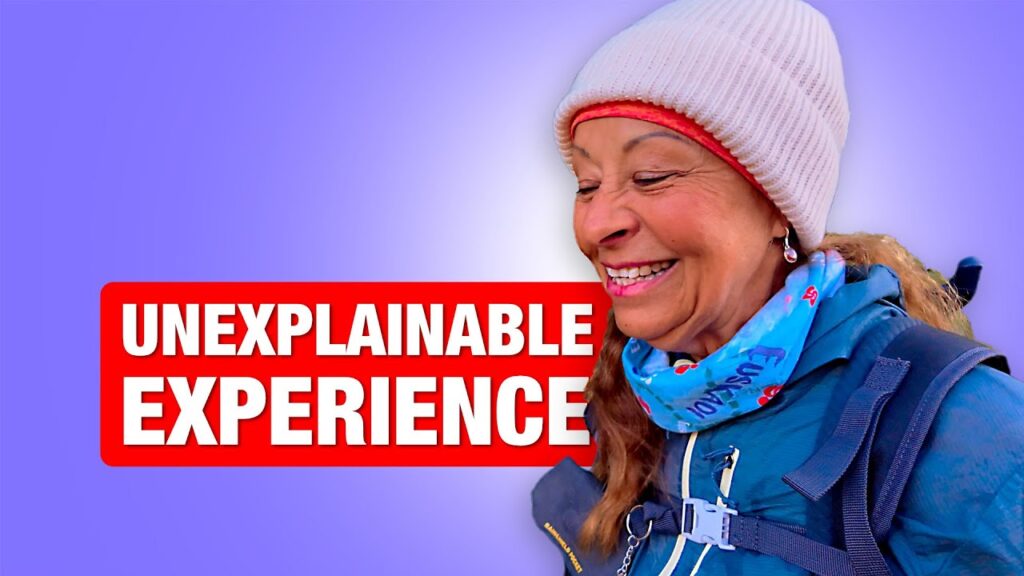
In this video of about twenty minutes, Hans meets Roxana, a pilgrim from Mexico who now lives in Southern California, on the Camino de Santiago. She talks about her reasons for walking, why she thinks nobody should impose a religion on anyone, her worries about nature in Europe, and an out-of-body experience linked to the death of a family member.
This is a personal account of one person’s experience and beliefs, offered as one voice among many. Nothing here is an endorsement of any belief as fact, and the experience described is her own interpretation of what happened.
Science and faith
Roxana was raised Catholic, with a Basque father and an Italian grandmother, and says she is a believer but not a fanatic. She also calls herself a person of science, so questions remain. She had planned to walk the Camino in 2020, but COVID cancelled it, and she says she has a “very personal reason” for the journey, which she chooses to keep private. She hopes to walk the Portuguese and Primitivo routes one day as well.
Should religions speak to each other?
Asked about interfaith, she answers differently than many might expect. She does not think religions need to talk to each other as such; she thinks everyone has the right to believe what they want, that no religion or political party should be imposed on anyone, and that wars over religion need to stop, since they destroy people and the world we leave to future generations.
Worries about nature
Roxana says she has noticed few insects, birds or other wildlife along parts of her route, compared with her home in California and Mexico, where her car windshield fills with insects. A man she met from Spain told her he pollinates his crops by hand because there are no bees nearby. These are her personal observations and impressions, not a survey. She also talks about Mexico’s programme of “magic towns” that encourages young people to stay and keeps communities alive, and says the dying towns she has seen worry her.
What is a human being?
Hans asks what a human being really is. Roxana answers first from a scientific view: we sit at the top of the animal kingdom, share the animal functions, and are set apart by our intelligence, though that intelligence has not stopped us from harming one another. She believes we are here temporarily with a mission to make a better place and protect the earth.
What happens when we die?
“Something’s got to happen,” she says. She believes the soul does not die, and when Hans asks if it was ever born, she is not sure, but mentions reincarnation. She says she has had at least four very intense, unexplained experiences in her life, and that these lead her to believe something powerful follows death.
The experience she describes
She shares one of them, and asks to be understood as telling it honestly. The night before a relative of hers was found to have died, she says, she had an argument with her daughter. That same night she had an experience in which she felt her spirit leave her body, travel quickly and find itself in a room where a loved one lay. The next morning she woke in tears, hugged her daughter, and told her she never wanted them to fight. Soon afterwards she learned the relative was missing. When the room was opened, she says, it matched what she had seen, and she realised she had been trying, in the experience, to call out and wake her. She adds that she swears it is true.
We cannot verify the account, and we share it with respect for the loss behind it. Many people report experiences like this around the time of a death, and different people explain them differently: as spirit, as the mind’s way of processing something it half-knew, or as something not yet understood. The video lets her story stand as she tells it.
Advice for a good life
Roxana ends with practical wisdom shaped by a hard life. She was widowed many years ago, raised four children alone, worked every day to send them to university, and now chooses to be happy and to enjoy each moment as if it were the last. Her advice: do what you like, because you will do it for the rest of your life; choose your profession wisely; don’t sweat the small stuff; put family first; and be okay with yourself in order to be okay with everyone else.
How to read it
This article is based on auto-generated English captions, so some wording may differ from what was said. The views on religion, nature and the afterlife belong to Roxana alone, and her environmental observations are impressions from one route, not data. If this topic touches a recent loss for you, please be gentle with yourself and consider talking with someone you trust.
Questions to take with you
Have you ever had an experience you could not explain, and how did you hold it? What would it mean to be okay with yourself before trying to be okay with everyone else? Related talks on this site include Why Not Live Like on the Camino?. Watch the video above and tell us in the comments what you took from it.