Is it possible to stay faithful to your own tradition and still learn deeply from others?
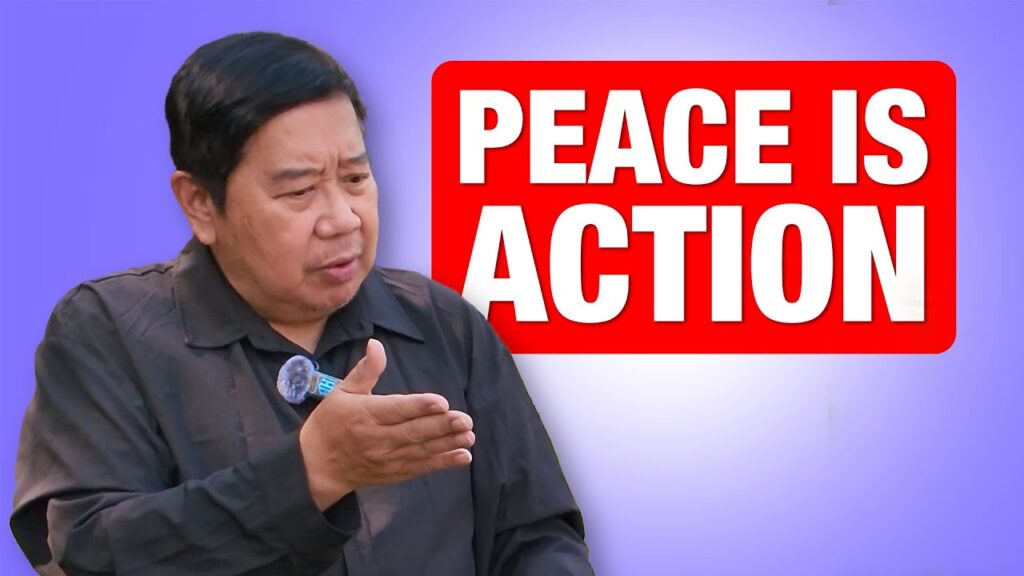
Hans speaks with Dr. Rey Ty, a core lecturer in the Department of Peace Studies at Payap University in Chiang Mai and director of the Religion, Culture and Peace Lab. He describes the backlash he has met from some Christians, his childhood in a family that went to church and temple, how interfaith work looks in practice in northern Thailand, and a simple teaching on happiness that he draws from Buddhism.
What follows is Dr. Ty’s personal account and opinion, offered as one voice among many on this channel. His comments about religions, history and institutions are his own views, not statements of fact checked by this site.
Blocked for building bridges
Dr. Ty says some Christian pastors, in Thailand and elsewhere, have blocked or unfriended him on social media. He has heard that what he does is “not Christian” because the only way, in their view, is to work with Christians and convert people. He says he considers his work deeply Christian and carries on responding to the needs of the place where he lives. Several church-related organisations and funders, he adds, have supported the lab’s projects and have been open to its focus.
A lab for religion, culture and peace
He explains that peace programmes elsewhere in Thailand focus on Buddhist-Muslim relations in the south or on national politics in Bangkok. In the north, the lab concentrates on religion, culture and peace because the region is home to Buddhist, Christian and ethnic communities that also follow indigenous traditions, together with displaced people, refugees and stateless people from Myanmar. Projects have included storytelling work and an interfaith walking pilgrimage that listened to women of faith, people with disabilities, LGBT people and Theravada monks.
Church on Sunday, temple afterwards
Dr. Ty grew up in a Filipino-Chinese family: his father was Mahayana Buddhist, Taoist and Confucian, his mother Roman Catholic. On Sundays they went to church and then to the temple, where, he says with a smile, the vegan food was delicious. When he asked why, his parents said there was nothing wrong with visiting each other’s places of worship, since all wanted to do good and serve God and people. Being part of a minority in several ways taught him how minorities feel. He lost his appetite for ritual-heavy services, and his faith was rekindled by Protestant groups who worked with farmers, fisherfolk and plantation workers. He still calls himself a Catholic, baptised and not excommunicated, who is also close to the Methodist church.
Two paths to interfaith work
He sees two main approaches. One holds that all religions are different paths to the same truth. The other, which he follows, keeps to your own faith while respecting and learning from others, and accepts that some differences, for example between the Christian Trinity and Islamic tawhid, cannot simply be argued away. He says the real debates are for when you have become friends, and that agnostics and atheists should be part of the circle, with their own words of intention in place of prayer.
From talking to doing
The higher level of interfaith work, he says, is acting together. He tells of the pandemic, when a Sikh leader helped start a food pantry and people from several faiths, including Thai friends who cooked through the night and a Hindu temple that brought vegetables, helped prepare hundreds of packed meals. Motives differed, since some Buddhists were making merit, and he says that is human and fine. Eating together also teaches practical lessons, for instance about who does not eat pork or beef.
Learning, unlearning and questioning
Most of the lab’s students, he says, are from Myanmar and arrive with the tensions of their home country, including Buddhist-Muslim divisions. Visiting each other’s places of worship helps them move past fear, and he sees real learning when students challenge one another. Some were shocked to meet a woman pastor, and he told them they were there to learn and not to judge. He also urges careful reading of scripture: practices such as children’s rights or dietary rules changed over time, so claims that one religion is simply better should be balanced with its own history, including the crusades, the Inquisition and colonialism.
Happiness here and now
His closing teaching is that many people postpone happiness until retirement or heaven, while the Buddha taught finding it here and now, since we do not know what the next hour will bring. He says with a laugh that he ended up Buddhist.
How to read it
This is the view of an academic and practitioner of interfaith work, and it is presented with humour and from lived experience. His remarks about historical events, the origins of the ecumenical movement and the effects of particular church traditions are summaries from a conversation, not a scholarly history, and others may weigh them differently. The approach he describes, learning from other faiths without giving up your own, is one of several that people take.
Questions to take with you
What would it look like to share a meal or a task with someone of another faith instead of a debate? Which belief of your own would you be willing to look at in its historical context? Related talks on this site include Interfaith and Peace: From the Silk Road to Chiang Mai. Watch the video above and tell us in the comments what you learned.