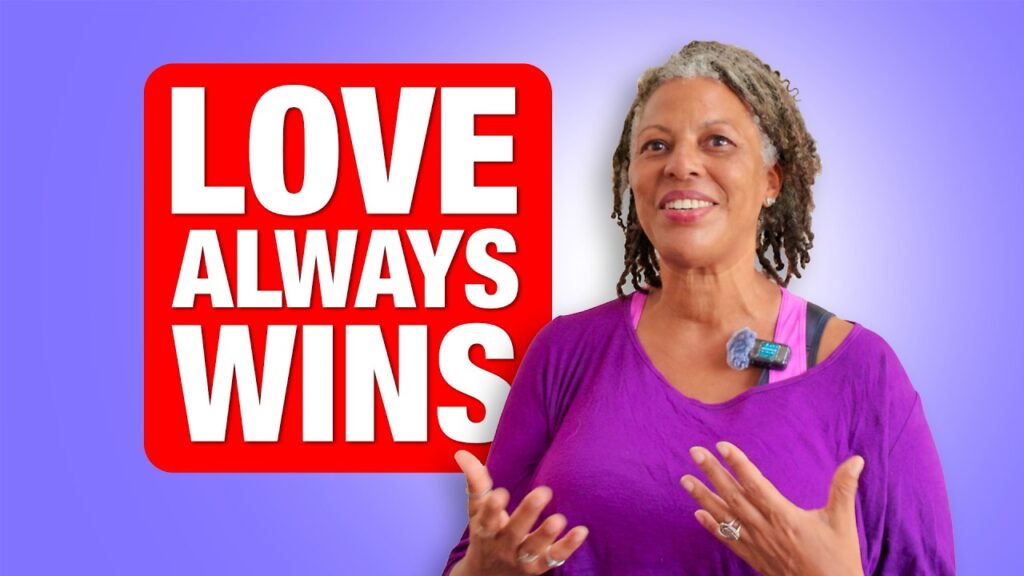
What does it take to stay loving when you hate what someone is doing?
Hans speaks with Christa Foster Crawford, an American lawyer who has lived in Thailand for 25 years and works against human trafficking. She is also a priest at All Saints Chiang Mai, a congregation that describes itself as welcoming to people of every age, gender, sexuality, race and theology. Over some 43 minutes she talks about how her idea of justice changed, why she stopped hating the people whose actions she opposes, and what she wishes she had known earlier about being herself.
What follows is Christa’s personal account and faith perspective, shared as one voice among many on this channel. It is not legal, medical or pastoral advice, and the views she expresses on church, society and politics are her own.
From “law and order” to restorative justice
Christa grew up in a conservative American evangelical environment where faith seemed mostly about heaven, with clear rules and little attention to the poor or to injustice. She came to Thailand as a lawyer who wanted to change the criminal justice system and who believed guilty people should go to jail for longer. Walking with people who had been exploited in brothels, and seeing how some of them went back to places such as Myanmar where society was breaking down, showed her that the world was not black and white. Victims can also be perpetrators, she says, and perpetrators have often been victimised themselves. Justice, as she now understands it, is making things right for everyone involved, the oppressed and the oppressor alike, and God’s justice includes mercy and kindness.
The high cost of hatred
Christa reads aloud a piece she wrote, “Whom do you hate?” In it she describes how someone with power over her family once caused great harm, and how she replayed the case against them in her head day and night until she realised she was the only one being punished. She began to pray for the person, not because she wanted good for them but to get them out of her mind. She did not mean it at first, she says, but within a year she was free of the obsession, even though the person never apologised. She is clear that she still hates injustice and is outraged by harm done by people in power. What she let go of was hatred of the people, because it changed only her. The piece ends with the line that hatred cannot conquer hate, only love can, and with the question to ask: not “whom do I hate?” but “whom have I failed in love?”
When the good are doing harm
She writes, she says, to make sense of something she finds heartbreaking: seeing harm done by people who claim to be on the side of good, including parts of the church she comes from. She believes many of them sincerely want to follow Jesus, and she tries to approach disagreement by asking where someone is hurting, and where she has gone wrong herself. Letting go of control and certainty, she says, and returning to the simplicity of “just love, just trust” has made her faith a much better journey, even though she has fewer answers.
A good world, a good beginning
A deep reading of the Bible in recent years, starting from page one, has changed things for her. The world was declared good from the beginning, and people are created in the image of God, so she tries to live as if there is enough for everyone and nobody needs to be fought as a competitor. She suggests that the radical commands of Jesus make life simpler when we trust that his account of reality is true.
A woman in a man’s world
Christa describes growing up as a bright girl who sometimes hid the right answer in class so as not to be excluded, and never fitting either the high-achieving career model or the conservative picture of a woman’s role. She says she has come to see this as a gift. After a long time as a pastor’s wife she was recently ordained as a priest, partly because she realised that her church valued inclusion while the front of the church looked like a row of older straight white men. She believes the image of God cannot look like one group of people, and she wants to learn from traditions she was not exposed to, including the Black church’s experience of liberation.
Be who you were made to be
Her closing advice, aimed especially at women but meant for anyone, is to reject the lie that you have to be like others to be accepted. She spent much of her life defining herself against moulds she did not fit, and calls this a terrible way to live. The point of life, she suggests, is the adventure of working out who we are, with strengths, weaknesses and wounds that also became maturity. She says she is less afraid than she used to be because she has survived so much.
How to read it
This is a thoughtful testimony from within the Christian tradition, and it speaks in Christian terms of God, Jesus and scripture. Readers from other traditions can still recognise the practical core: the inner cost of hatred, the difference between opposing a wrong and hating a person, and the freedom of not having to fit a script. Her descriptions of her upbringing and of parts of the church are personal impressions, not a survey of any denomination, and people within those communities may see things differently. The prayer practice she describes is one person’s experience, not a promised method.
Questions to take with you
Is there someone you replay in your mind whom you could stop prosecuting, without excusing what they did? What mould have you spent energy resisting, and who would you be without it? Related talks on this site include How to Break Free from Anger: Who Is Actually Holding On to It? Watch the video above and tell us in the comments what you take from Christa’s story.