If life is a pilgrimage, where do you think it ends?
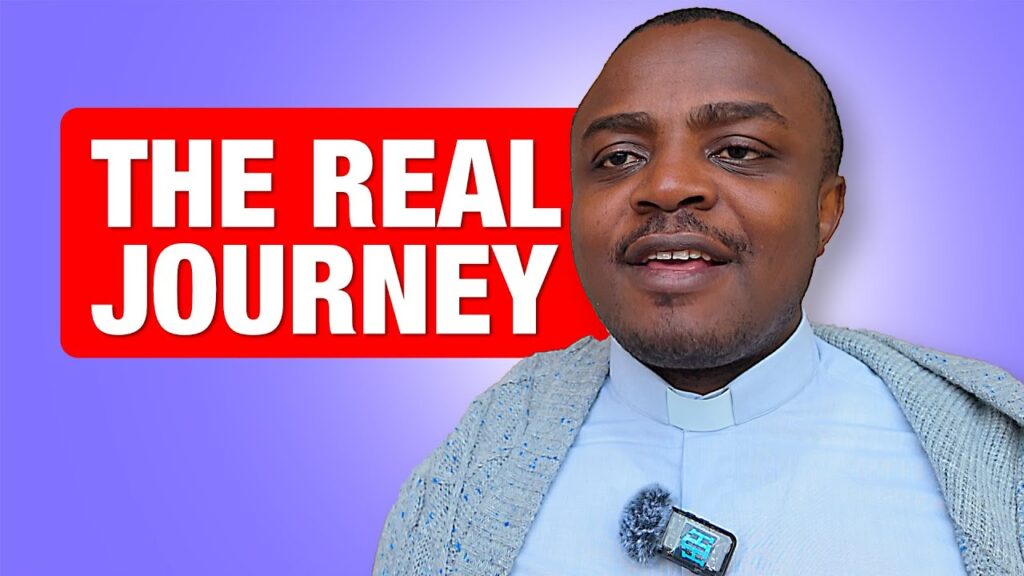
In this video of about seven minutes, Hans speaks with a Catholic priest from Nigeria who is studying biblical theology in Pamplona, Spain. He introduces himself as Father Kasmir (the spelling is uncertain in the captions). He talks about pilgrimage as a picture of life, how he came to the priesthood, and what he hopes for at the end of life.
This is a personal Christian testimony, offered as one voice among many. He speaks only for himself, and nothing here is an endorsement of any belief as fact or a substitute for medical, legal or professional advice.
Life as one big voyage
The priest says we are all on a big voyage, because we all came from somewhere and are going back to somewhere. Just as pilgrims walk towards Santiago, he says, we are all walking towards eternity. For Christians, he explains, that means walking towards the kingdom of God. He notes that every other faith has its own idea of pilgrimage, but for him it is something spiritual: his pilgrimage does not end in Santiago but in the world beyond, and as long as we live we are all pilgrims.
An inherited faith made personal
He describes being born into a Catholic family and raised partly by his grandmother and an uncle who became a priest. He was born in 1991, close to the year his uncle was ordained, and people used to call him “reverend father” as a nickname. He says he told his mother he wanted the name to come true. He then describes the long path of formation he was told about, and says he was ordained in August 2020 and taught at a minor seminary in Nigeria for three years before coming to Spain to study and later teach future priests. He says his faith was inherited, but that he made it his own by learning the doctrines and praying.
Signs, and being “naked” without God
He does not claim dramatic visions like the biblical Samuel, but says there have been signs. He mentions that he was raised by an uncle with help from people God sent, and that he was once nearly drowned in a river and, as he puts it, saved by God’s intervention. Retelling the story of Adam and Eve, he says that without God we are “naked”, and that when a person puts self in charge in place of God, something else ends up controlling them.
Death and what he prays for
He says what he likes about Europe is that at the moment of death people remember that God exists, and he points to how many Masses are offered for the dead. He tells of a family in Germany whose mother did not believe in God but asked to be buried from a Catholic church. For Christians, he says, death is the last opportunity to decide whether you stand with God or against him. His own prayer is to die believing in God and in his salvation. He closes by saying that life lived with God and doing God’s will is a fulfilled life, that discoveries and inventions should be used to better the world, and that people will be remembered for the impact they made, not for what they acquired.
How to read it
This article is based on auto-generated English captions, so some spellings and details may differ from what was said. The priest’s views on God, judgment and the afterlife are personal convictions from within the Catholic tradition; other guests on this channel, including other pilgrims, see these questions very differently. We share his words with respect and do not present them as established fact.
Questions to take with you
If your life is a journey, what do you think you are walking towards? What would you like to be remembered for? Related talks on this site include My Life Was Over, Then I Walked the Camino. Watch the video above and tell us in the comments what you took from it.