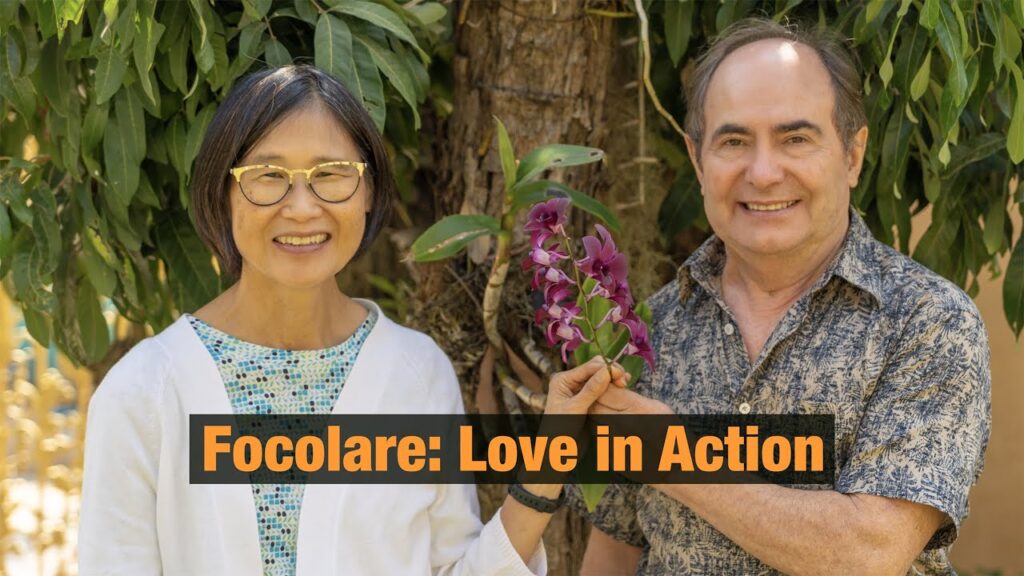
Can small acts of love really help build a united world?
In this interview of about twenty minutes, Hans speaks with Bridget, originally from Hong Kong, and Giorgio, an Italian, both members of the Focolare Movement living in Thailand. They explain what the movement is, how it came to be in northern Thailand, and how they understand love, spirituality and death.
This is a personal conversation offered as one voice among many. Bridget and Giorgio speak from within the Catholic faith, for themselves, and nothing here is a statement of established fact or a substitute for professional advice.
Who they are
Bridget says she grew up in Hong Kong, met the Focolare as a teenager, spent about three decades in the United States and recently moved to the community in Chiang Mai. She is part of the movement’s core group, whose members are consecrated. Giorgio says he was born near Venice, met the movement at twenty and has lived in places including Cameroon, Switzerland, the Philippines and Pakistan before settling in Thailand, where he says he feels a strong spirituality.
What Focolare is
They describe it as a movement within the Catholic Church that began around 1943, during the Second World War, when a small group of women, led by Chiara Lubich, sheltered together and read the Bible. They were struck by the prayer that all may be one and the call to love. The movement, they say, has grown worldwide, is recognised by the Church, and includes families, children and people working in fields such as economics, law and medicine. Their aim is to build a united world, starting with loving the person next to you.
Dialogue in Chiang Mai
Giorgio says there are two communities in Chiang Mai, one of women and one of men, and that it was a Buddhist monk who invited the movement there, to continue a dialogue with respect. They stress that nobody is asked to change their beliefs, and that the goal is to find common ground while remaining faithful to one’s conscience.
Spirituality, love and death
For Bridget, spirituality is the desire to look for meaning, rooted for her in finding a God who loves her and in loving the people around her. Giorgio describes religion as an encounter with a person, Jesus, rather than only rules and worship. Asked about death, both express the Christian hope of resurrection and of meeting loved ones again. Giorgio says he does not fear it, though he admits he might in the last moment, and describes it as a new beginning, while Bridget speaks of paradise as something that can begin here when we love one another.
Serving others
Giorgio tells of working in a hospital laboratory in Africa and, in the Philippines, of meeting a hungry man in Manila who was refused food, which led him and young volunteers to cook and hand out food twice a week. He says helping others brings immense joy. Their closing message is to keep loving in good times and hard times, because, as they put it, life does not end.
How to read it
This article is based on auto-generated English captions, so some spellings and details may differ from what was said. Their views on God, paradise and what happens after death are personal convictions of Catholic faith, not established fact, and other guests on this channel, including from other traditions, see these questions differently.
Questions to take with you
What is one small act of love you could offer this week to someone close, or to a stranger in need? Where could you meet someone of a different faith at common ground? Related talks on this site include Building Bridges from Chiang Mai to Dumaguete: Alma Ruiz on the Focolare Movement. Watch the video above and tell us in the comments what you took from it.