Can a machine ever truly understand who you are, and what do we lose if we let it make us “perfect”?
In this thirteen-minute essay, Hans accepts that AI is here to stay and expects real benefits for health, the environment and everyday comfort, but only if we use it with those goals in mind. He then asks what we owe each other as a human community, why our own imperfect opinions matter, and where lasting peace comes from if not from an ever-better answer machine.
This is a personal reflection offered as one voice among many. It is not legal, political or professional advice, and the claims about companies, governments and technology are the speaker’s opinion.
Babies playing with fire
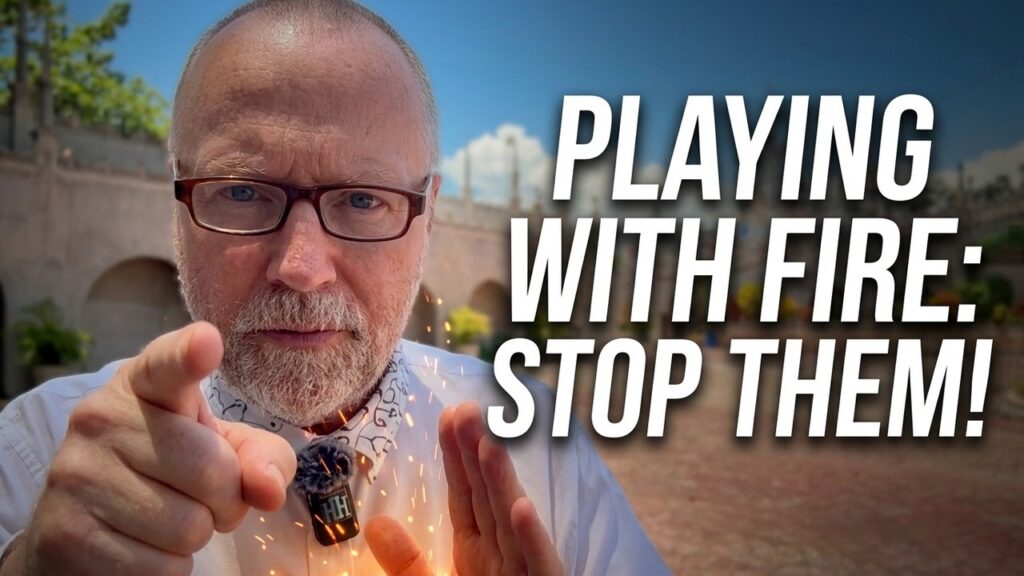
Hans opens with a blunt image: if society does not enforce certain guardrails, it is like sending a couple of babies into the forest to play with fire. In his view the big corporations have a very narrow goal set, centred on power and economic superiority, and the human community should show them where to stop and how to serve a greater good “for real, not as a marketing campaign”. He compares the rush of AI to the arrival of gunpowder, which gave a few people an advantage over others, and adds that such domination only works if we allow it.
What you can do
His practical suggestions are modest. If you work in the judicial system, get active. Otherwise vote for politicians who see the urgency of sensible rules for AI. And for yourself, stay away from AI when it comes to expressing your own opinions, because being imperfectly opinionated towards reality is how we learn life’s lessons. He argues that if we leave it to the machine to make us a perfect human, we miss the chance to improve ourselves.
Creators, not consumers of answers
Machine answers, Hans says, are not really creative. Artists do not hand over perfect images; they offer a different point of view that provokes a feeling or a new understanding, which he sees as important for “this spiritual experiment called Earth”. AI may find things we overlooked, but we had the idea to make it look, and everything it knows exists because humans created the data it ingested. The greatest danger he names is the illusion that AI can substitute for human relationships, a “sycophant in your pocket” that praises every idea. On young people he is realistic: prohibition tends to make things more interesting, so he would rather support the people who bring them up and give them time to teach.
Enough, and the one knowledge
The final third turns inward. Hans says the majority in the Western world have more than they need but live in an illusion of scarcity, and that a feeling of “not enough” cannot be filled with material objects. If AI will soon know everything better than we do, he reasons, there must be a kind of knowledge superior to accumulating data. That is what each person has to find, with the help of those who have shared wisdom, and the result he hopes for is peace inside, from which life already looks abundant.
How to read it
The call for public rules on AI and for keeping your own voice are positions many people share, though how to regulate AI is widely debated and the talk offers no specifics. The comparisons to gunpowder and to cigarettes are analogies, not evidence. The remark about countries restricting young people’s access to social media is mentioned in passing and not sourced, so check current rules where you live. The spiritual claim, that a superior knowledge brings peace, is a matter of practice and faith rather than something this essay tries to prove.
Questions to take with you
Where in your week do you hand over an opinion you could have formed yourself? What would “enough” look like for you today? Related talks on this site include Is AI Dumbing Us Down? and Brain Doesn’t Cost Me Anything. Watch the video above and tell us in the comments how you use AI without losing your own voice.