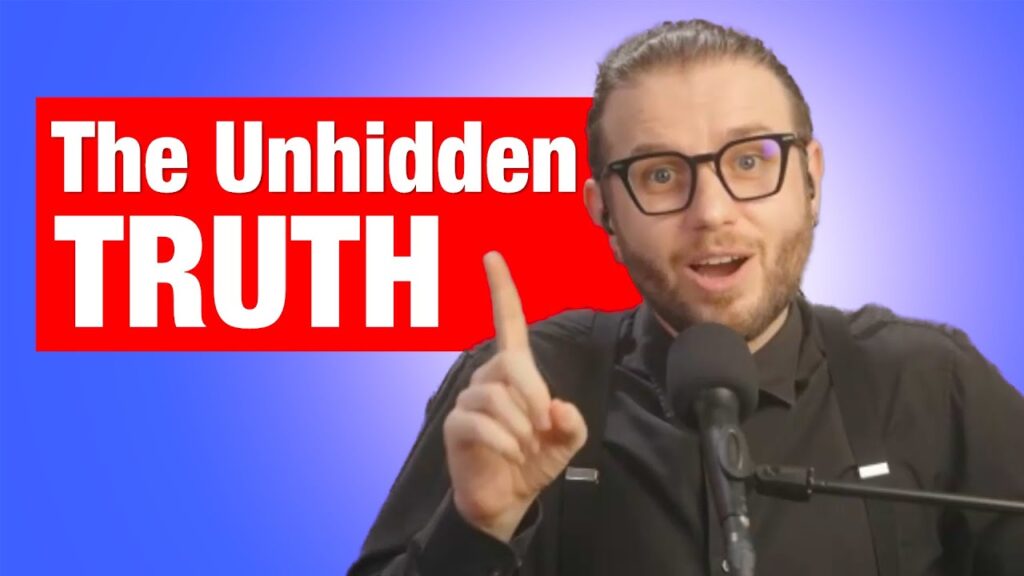
What if the truth is not hidden but impossible to find, and our search for enlightenment is just another trap of the mind? Hans talks with Dr. Hellmut Monz, a philosopher, author, president of Key Philosophy and senior lecturer at RMIT University Vietnam, about non-duality, the limits of logic and what remains of philosophy in the age of artificial intelligence.
This is a written summary of a conversation between two people sharing their views. Dr. Monz’s references to ancient philosophers are his own account, and we have not independently checked every historical detail. It is one perspective among many, not a claim of proof.
Non-duality has Western roots too
Hans opens by saying he first assumed non-duality was an Eastern idea, until he found Greek philosophers talking about something similar. Dr. Monz agrees, with a caveat: you have to dive very deep into Western philosophy, down to its origin, to find it. He points to Anaximander, whose oldest surviving sentence in philosophy, as he recalls it, says the origin of all beings is the apeiron: boundlessness, or literally infinity, that which has no limit.
Around 500 BC, he says, there is a nice symmetry between East and West. In the East we have the Buddha, the awakened one, and Lao Tzu; in the West Heraclitus, the dark one, and Parmenides, called the son of Apollo, god of the sun. Light and darkness, enlightenment and obscurity, appear on both sides.
Philosophy and spirituality: contradiction or partnership?
Is philosophy, which trains the mind, in tension with spirituality, which can seem illogical? Dr. Monz calls philosophy the fundamental science from which serious discussions arise, and notes that the very word logic comes from Heraclitus’s logos, which also opens the Gospel of John in Greek. Philosophers try to separate truth from what merely appears true, and so they study exactly the boundary between reality and fantasy that spirituality can blur.
He is also frank about philosophy’s own faults: it can drift off into the heavenly clouds of the ideal, as in Plato, and become so abstract that it loses touch with life.
The Lego of language
Asked about spirituality, Hans describes his audience: many Christians, others active in the interfaith community, Muslims, Zoroastrians, Sikhs and more. Language, Dr. Monz says, is like Lego: you build with a limited set of pieces and it is never perfect. A Muslim and a Christian may both say “chair” and “table” and not understand each other, because their perceptions differ. Interfaith dialogue helps, even something as simple as eating together, since we learn other worlds with other words, and our minds filter reality.
Duality as a duel in the mind
Dr. Monz likes to hear duality as duel: two things facing each other in disagreement, left against right, black against white. Non-duality then points to that which negates this dueling, which is simply agreement. But the mind plays a trick on us here, because the moment we speak of agreement we have created agreement and disagreement again. He adds that philosophy is sometimes described as thinking about thinking, but part of thinking is also the ability to stop thinking.
Philosophy as truth hunting, and the wisdom of love
On devotion, Dr. Monz says philosophy begins where blind trust stops. Philosophy is usually translated as the love of wisdom, a needy kind of love and a desire. Hans asks whether it could be the wisdom of love, and Dr. Monz agrees that proper philosophy is exactly that.
He then cites a very early definition attributed to Pythagoras: a philosopher is a hunter of truth, someone who wants direct first-person experience rather than mediators. But he adds a warning: the hunter can become the hunted, and the truth may honour only honesty, not trickery.
Truth as the unhidden
This is the core of the conversation. The ancient Greek word for truth, aletheia, literally means the unhidden. “It would be impossible to find the truth if it really is the unhidden.” You can only find what hides, so nothing you do in the search could help, because there is no pocket, camouflage or cover-up behind which the truth could be. That it cannot be found does not mean it does not exist, he stresses. It is open for everyone to see, in the sense of tat tvam asi: you are that. He also says truth can be heard as the “unforgettable”, since it cannot be pushed away in space or time.
Believing versus knowing: Jung
On faith and knowing, Dr. Monz recalls a famous interview in which Carl Gustav Jung, asked whether he believed in God, answered that he did not need to believe because he knew. (Hans mentions he will add a link in the description.) Dr. Monz adds that blind faith can be misused, and shares that as a child he kept asking what “omnipresent” really meant and was never satisfied with the answers.
Plato’s cave as a story about fake enlightenment
Dr. Monz retells Plato’s cave: prisoners chained and watching shadows on a wall, unaware they are imprisoned. One is dragged out into the sun, then returns to tell the others, who do not believe him. The part he wants to stress is a question Socrates does not ask: who freed the prisoner, and why? Perhaps the escape is itself part of the illusion, like the ending of The Truman Show, where the exit may only lead into a bigger studio.
Hans connects this with the idea in Advaita Vedanta that even the heavens are not the end, and asks: what if you woke up to another dream? How do we tell real awakening from a better deception? Dr. Monz’s answer is to demand proof, to ask how you know that you know and do not merely believe. He also suggests that sages may keep quiet about their insight, since societies tend to defend their boundaries and morality against those who say boundaries are not real.
Success, young people and information overload
Success is usually defined as an increase in boundaries: a bigger bank account, apartment or garden, and then another level. Hans raises young people who struggle with mental health and an endless stream of information. Dr. Monz says a philosopher cannot rely on a trusted mentor, since the aim is direct experience without mediation or filter. He describes science as knowing less than it seems, speaking mostly in probabilities, and its picture of a small planet circling a dying sun in a heat-death universe as bleak enough to send us to our phones to consume. His advice is not to be discouraged: even scientists have similar problems, and knowledge that gets overturned qualifies as belief.
Philosophy and AI
On artificial intelligence, Dr. Monz says philosophy has never been more important, because the stakes are knowing what is real and what is artificial: deepfakes, faked authorship, hallucinated references. He points to Howard Gardner’s multiple intelligences and the “existential intelligence” needed to ask what is real, good or true. In his view AI simulates truth extremely well but cannot cheat its way to it. He compares its tendency to flatter to his mother praising a poorly played Christmas tune, and recommends using AI for learning but not giving up your own intelligence or accepting authority just because someone, or something, says so. (This is his opinion rather than a tested finding.)
Death, a fly and the question “why?”
Asked what happens when we die, Dr. Monz reminds us we would first need to have been born, and tells a childhood story from around age two: trying to wake his sleeping father, he watched a fly land on his father’s moustache and disappear into his nose. He felt that everything that is born must die and flies into a black hole, and asked “why?”, which felt like a portal opening. For him the question is the philosopher’s path: keep asking with burning intensity and do not settle for apparent answers.
He closes with a smile: next time you drive into philosophy, wear a helmet.
Chapters
- 0:03 — Introduction to Dr. Hellmut Monz
- 0:41 — The Western roots of non-duality in ancient Greek philosophy
- 1:25 — What is non-duality? A philosophical breakdown
- 3:36 — East meets West around 500 BC
- 4:53 — Philosophy vs. spirituality
- 5:55 — The significance of “Logos”
- 11:00 — The “Lego” of language
- 15:15 — Duality as a “duel” in the mind
- 19:06 — Devotion in spirituality and Advaita Vedanta
- 22:08 — The philosopher as a “hunter of truth”
- 24:24 — The unhidden truth: why you can’t “find” it
- 28:44 — Carl Jung on believing vs. knowing God
- 32:37 — Plato’s cave: a story about fake enlightenment
- 38:43 — Why enlightened sages might hide their knowledge
- 42:22 — Young people in the information age
- 48:02 — Artificial intelligence and the future of philosophy
- 54:56 — What happens when we die?
- 56:01 — A childhood encounter with a fly
- 1:00:45 — The power of “why”