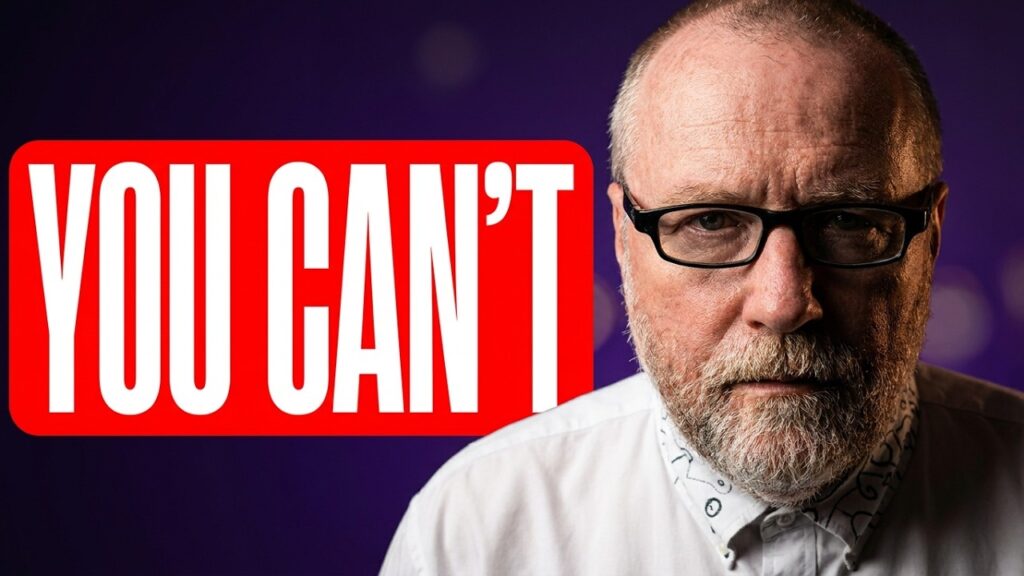
Do you have the right to change someone else’s mind? Hans opens this fifteen-minute talk by turning the question on the listener, and then spends the rest of it asking where such a right could possibly come from.
This is a personal reflection offered as one voice among many. It expresses the speaker’s beliefs and is not an endorsement of any claim as fact, nor medical or professional advice.
Force only works while the force lasts
Hans starts with violence and manipulation. Trying to solve problems with violence, he says, is mostly a desperate attempt to influence reality, and it is “wishful thinking” to believe that dominance changes how others think. The moment the threat is dropped, the effect disappears, so anyone who wants to keep up the manipulation has to keep the threat alive, which leads to more violence. Fear and raw energy are the two ingredients he names: you can set fire under someone’s feet and make them jump, but only as long as you keep supplying the effort.
Systems, fine print and the price of a promised land
From there he widens the lens. Political parties and other dominating structures, he says, spend large sums to keep pressure on people, then lean on laws, police and courts that rely on fear of accountability, of fines or of being expelled from society. He points to the fine print we sign without reading when we install an app, and to the line “I have nothing to hide”. His longest example is the corporate offer: a very well paid job, a promised bright future, a prescribed look and way of speaking, and a company presented as something greater than you. He compares it to the old story of selling one’s soul to the devil, and says it works only as long as money keeps flowing or you are dependent on the next payment.
The natural law of free will
The turn comes with what he calls a law followed by those with great wisdom: holy people respect your free will, and God loves unconditionally, without conditions. We may offer opinions, help and inspiration, he says, but not impose rules on others because we think it is better for them. Children have to feel heat to understand fire; parents cannot stand between the child and every flame. “We can offer help, but we cannot afford others to accept the help.”
Inspire, don’t push
The one form of influence Hans endorses is example. When others see you act a certain way, they can choose to follow your footsteps. Doing good, he says, feels good and nurtures the soul, and doing harm feels bad. He closes with the idea that your own peace is the cause of peace in the world, so it is worth tending that first before trying to change those around you.
How to read it
This is an essay of opinion, not research, and it makes sweeping statements about corporations, politics and the people who work in them that will not fit every employer or every institution. Spiritual language such as divine law, God and “soul” reflects the speaker’s own outlook. The practical core is simpler and easy to test: notice where you are trying to push someone toward a change, and ask whether you could offer a perspective and then step back.
Questions to take with you
Where in your life are you trying to change someone? What happens if you inspire instead of insist? Related talks on this site include The Ego’s Secret Addiction to Struggle and Notes to Self. Watch the video above and tell us in the comments what you think.