Who is listening when you notice that your mind has wandered off?
In this talk of about eleven minutes, Hans speaks alone about the restless mind, what we can do with it, and why he suggests turning inward instead of looking for the next big thing.
This is a personal reflection offered as one voice among many. It is not medical, psychological or professional advice, and the practices mentioned are not presented as treatment.
A mind that loves to be busy
Hans opens by describing how the mind wanders even while we listen: it runs, jumps, climbs, travels through the universe or into an atom, and sometimes hides in a dark corner looking for revenge. He notes that the body cannot follow it to these places, and sorts thoughts into kinds: some serve immediate survival, others travel to the past or future, and others are patterns based on fear or pain, on the search for pleasure, or on annoying judgments about being bored or uneasy.
The observer
He points to something more available: the witness who can observe the mind in action, which he says is more truly “me” than the mind itself. Noticing this lets us separate awareness from the constant activity of thought and tell what is helpful from what he calls monkey thoughts. Comparing us to a cow that walks to green grass and runs from a stick, he says humans can choose whether to follow pleasure-seeking or fearful images. To interrupt them, he suggests coming back to the present: feel your feet, check your breathing, touch something nearby. He calls this a secret superpower.
Giving the mind something to play with
Hans likens the mind to a little pet monster that needs toys. Mantras and prayers, he says, can be clean and healthy ways to keep it busy, and affirmations can convert unwanted thinking into useful results. He adds that chasing happiness through worldly pleasures tends to disappoint because everything is impermanent, and invites us to find that out firsthand rather than take his word. Another suggestion for idle time is a prolonged “I” on the inhale and “am” on the exhale, or the short mantra Om.
Who am I?
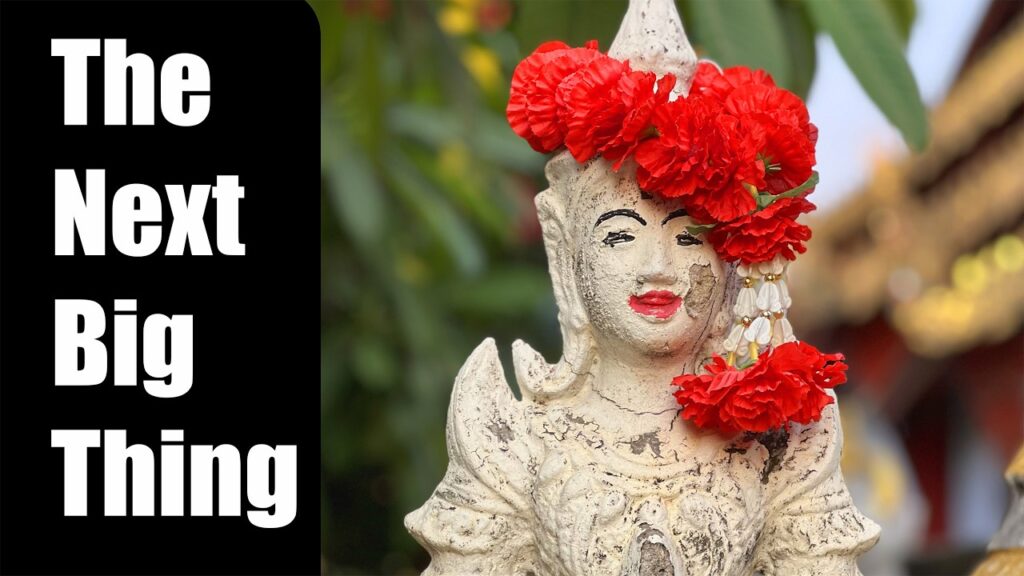
He closes with the idea that you are not your mind; you have one. The most interesting question, he says, is “Who are you?”, and an honest answer is “I don’t know”. Asking “Who am I?” is good food for the mind, and instead of looking for the next big thing, he suggests the biggest thing of all is right here inside you.
How to read it
This article is based on auto-generated English captions, so details may differ from what was said. The title promises a test of “the next big thing”, but the transcript does not describe a specific product or experiment, so this summary covers only what was said. The claims about the real self and Source are personal convictions, and other guests on this channel see them differently.
Questions to take with you
What does your mind reach for when it is bored? What would you notice if you checked in with your breath for one minute today? A related talk on this site is The Struggle to Relax Is Your Real Problem. Watch the video above and tell us in the comments what you took from it.