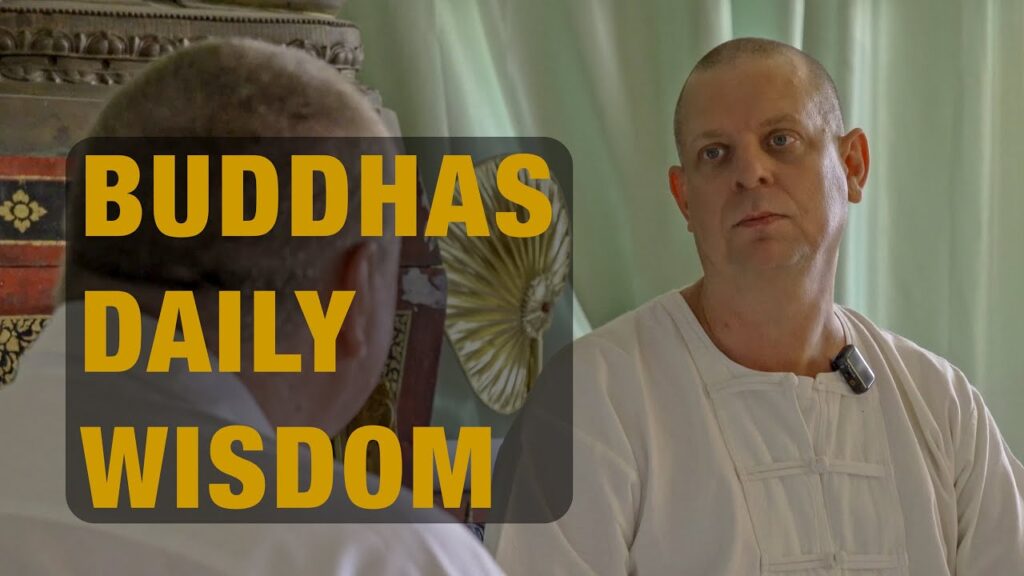
What if the peace we look for is less about beliefs and more about training the mind?
In this video of about twenty-three minutes, Hans speaks with David, an American-born teacher who now teaches the Buddha’s path in Chiang Mai and, as he says, around the world. They talk about his turning point, what “spirituality” means to him, identity and the self, the fear of death, and how he responds to students who arrive with big problems.
This is a personal conversation, offered as one voice among many. David speaks for himself and his understanding of Buddhist teaching. Nothing here is medical, psychological or religious advice.
From business to teaching
David says he began in the business world and information technology, then ran his own business and taught Thai massage for about ten years while dabbling in Buddhism. After moving to Thailand in 2015 he says his understanding of the Buddha’s teachings deepened, and by 2018 he was teaching them alone. He describes a hostile childhood, crying in his room at the age of eight and not understanding why he felt so much love for others without receiving it. In 2018, he says, his mind had become so discontent and unmanageable that he dived “head first” into the teachings.
Mind training rather than spirituality
David says he does not use the word “spirituality” in his teaching. In his understanding, the Buddha spoke about training the mind, not about whether a spirit or soul exists. The path, he says, is a practical and logical understanding of natural laws, applied in daily life, with results you can see in the condition of your mind. He describes an enlightened state as one without anger, sadness, guilt, fear or anxiety.
Who are we, then?
Asked about identity, David says the mind tends to cling to a self-image: “I am German”, “I am a boyfriend”, “I am a father”. When life changes or someone disparages that identity, he says, suffering follows. He compares the mind to a computer’s central processor: if it is polluted the whole system suffers, so improving the mind changes how life is experienced. He suggests that wanting to “leave my mark on society” is itself a heavy burden, and that being a peaceful, wholesome person is already enough.
Facing death
On the fear of death, David says the fear comes from craving permanence. He presents the Buddhist view that unenlightened beings are reborn and enlightened ones are beyond what the Buddha left undeclared. This is his tradition’s teaching, not something we can verify. His practical suggestion is contemplation of death: sitting quietly for ten to twenty minutes, imagining your own death and what follows, perhaps once a month, letting any grief arise and then letting go of the clinging. He says this can make death feel less like a surprise visitor.
Responding to problems
When students bring anger or confusion, David says he tries to respond rather than react. People often see the problem as outside them, a parent, a boss, he says, but he asks questions to find what wisdom is missing, offers it, and encourages them to test it themselves. If everything is caused by others, fate or luck, he says, you are locked in; if your decisions shape results, you can make different ones. He points to a website where his classes, books, videos and personal guidance are offered at no cost.
How to read it
This article is based on auto-generated English captions, so some details may differ from what was said. David’s views are his personal understanding of Buddhism, and claims about rebirth or the end of all anger are beliefs, not established fact. Other guests on this channel, and other Buddhist teachers, understand the path differently. If you are struggling with painful emotions, please also seek support from someone you trust or a qualified professional.
Questions to take with you
Which identity are you holding most tightly this week, and what happens when someone challenges it? If you looked for the missing wisdom behind one recurring problem rather than the person causing it, what might you find? A related talk on this site is “No Need to Be Buddhist”: Master Phra Moon on Karma, Meditation and a Path Open to Everyone. Watch the video above and tell us in the comments what you took from it.