What if the thing that unites people is simpler than anything that divides them?
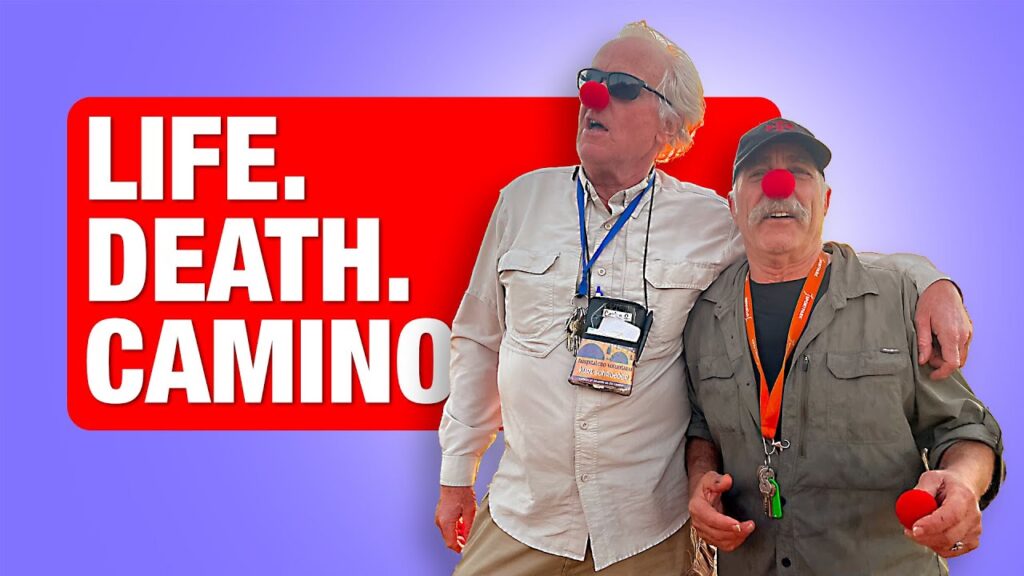
In this video of about thirty minutes, Hans meets two volunteer hosts, called Kurt and Aldo here, at a donation-based albergue on the Camino de Santiago. They tell how each of them found the Camino, why they come back every year to serve pilgrims, and what they have learned from walking more than a handful of routes.
These are personal stories and beliefs, offered as one voice among many. The two men speak only for themselves, and nothing here is an endorsement of any belief as fact or a substitute for medical advice.
How the Camino found them
One of the men says he was in a hospital bed with colon cancer, not knowing whether he would live, when he decided that if he did, he would do the things he had wanted to do when he was young, such as backpacking across Europe. He studied the trails, chose the Camino, and set out in 2013. The other says he was a self-described professional couch potato until a friend’s birthday party in Germany, where, after four glasses of wine, he agreed to walk part of a long route. The first five days, he says, he thought he would die, and then it got better and better.
Both describe the Camino as habit-forming. One compares the first time to a little heroin; the other says he has walked nine different Caminos. When they come home, they say, people who have not done it often reply that they just went on a hike.
A hospitality with no fixed price
Instead of walking each year, they now come to the albergue to serve. Pilgrims arrive from all over the world, they say, and get beds, showers, dinner, breakfast and, as one jokes, philosophy and entertainment. The evening in the video includes a shared meal, a grace sung at the table, and plenty of laughter. They say they have been coming every year since 2016 and know the village and even the dogs.
An old pilgrim in an orchard
One of them tells a story from a walk on the Via Francigena, travelling from Rome toward Santiago against the usual direction. A walk that should have taken five hours, he says, took nine, and he lay down under an olive tree in the dark. He woke to find an old pilgrim with a shell on his hat, who seemed to want to teach him the song of the ancient pilgrims, which he repeated quietly after him. He calls it a rip in the space-time continuum and tells it as an experience, not as a proof of anything.
What the trail does to people
The hosts describe a walking rhythm in which, if you are alone for a while, you fall into a kind of meditation, colours come alive and you hear sounds you would normally miss. They say every pilgrim has the Camino in common, which creates trust, and that this is one of the few places where everyone looks for what they share rather than what separates them. They mention the saying that the Camino gives you what you need, not what you want, and describe moments of help: a stranger with the right tool for a broken backpack, or a pilgrim in a wheelchair asking others to help place her stone at the cross. One says that moment turned his own sore feet into gratitude.
One is a Protestant on a Roman Catholic pilgrimage and says it showed him that we all have the same boss. He tells of a Spanish atheist in a Camino family who cried like a baby when he hugged the statue in the cathedral, and concludes that it is not only about the walking.
Dimes from a mother
One of the men tells how, as a young man, his mother always asked whether he had a dime, because with a dime you could call her from a payphone and she would come, no questions asked. Since she died about ten years ago, he says, he keeps finding single dimes, never any other coin. After a fire destroyed his city in 2018 and he lost everything he owned, he went to look at his empty lot to decide whether to sell it. He found a dirty dime blending into the soil, and then a shiny one beside the car. For him it meant: turn the page, sell the lot. He calls them messages from the other side, while saying plainly that what happens after death is hard to say and that he would not rule anything out.
Take care of each other
Their closing advice is simple: do unto others as you would have them do unto you, look for what you have in common, and remember that the world’s divisions are taught and unnecessary. They offer a joke from a shirt they once wore, “I’m a better pilgrim than you are because I’m not judgmental”, and say that the only thing we should not tolerate is intolerance. On the Camino, they say, everything is stripped to walking, eating and sleeping, and everyone has the same challenges whether rich or poor.
How to read it
This article is based on auto-generated English captions, so some names, places and details may differ from what was said, and we have not tried to name the albergue or the village. The dimes and the vision are personal experiences. Other guests on this channel interpret such events differently, and some would call them coincidence. What many viewers may recognise is how a shared difficulty can quickly turn strangers into a community.
Questions to take with you
Whom could you meet this week by looking first for what you have in common? What small signs, a coin, a song, a phrase, carry a loved one’s memory for you? Related talks on this site include My Life Was Over, Then I Walked the Camino. Watch the video above and tell us in the comments what you took from it.