What if forgiveness has nothing to do with excusing anyone, and everything to do with choosing your own peace?
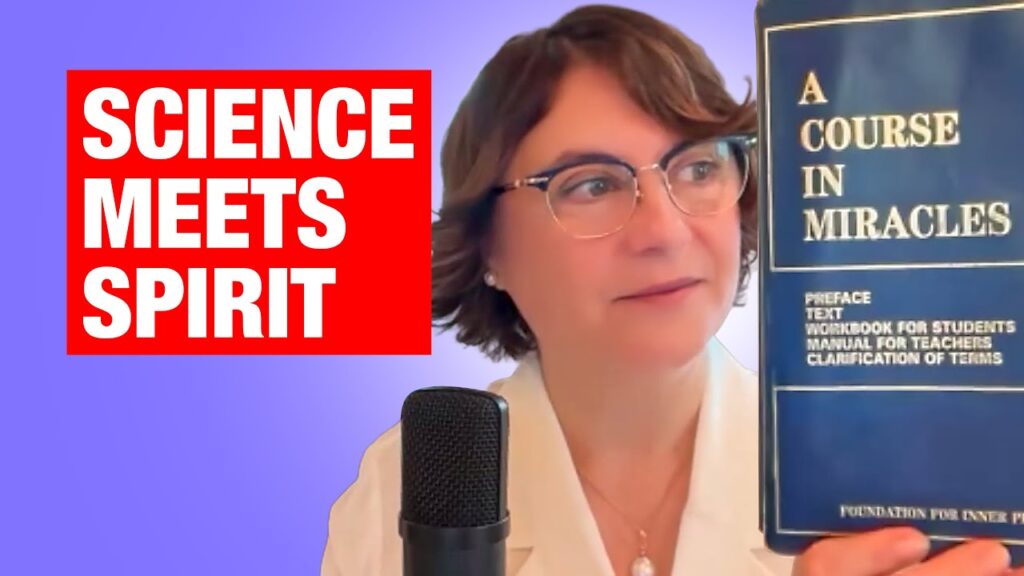
That is the heart of this conversation with Dr. Gabriela Ilie, an endowed scientist in cancer quality-of-life research and associate professor at Dalhousie University in Nova Scotia, who has also studied A Course in Miracles (ACIM) for many years. She begins with a short prayer and then talks about forgiveness, healing the mind, and why she thinks you do not need a guru to hear your own inner wisdom.
What follows is Dr. Ilie’s personal perspective as shared in the conversation. It is not medical or psychological advice, and we share it as one voice among many.
A prayer to begin: “Be you in charge”
Before the interview starts, Gabriela reads a prayer from ACIM that she says she brings to mind from the moment she wakes until she goes to sleep. It asks to hand the day over: “Be you in charge”, with the trust that a word, a thought or simply stillness will be given when needed. She says it takes the worry out of what she will say or do.
Spirituality as curiosity
Asked what spirituality means, she quotes Einstein as she remembers him: to be spiritual is to be curious. For her, closeness to what is eternal needs the humility to say “I don’t know” and the innocence to enjoy the mystery. She is wary of anything coerced, including forcing yourself into a calm or curious state, and she thinks organised religion has sometimes done harm that way.
Why ACIM, in her view, is so non-dual
She calls the Course the most non-dual spiritual document she has read, and she is careful to say this is her own reading and not hearsay. Its opening line, “Nothing real can be threatened. Nothing unreal exists”, points to oneness, and, she adds, it comes with a daily workbook that shows how to practise rather than only believe.
Forgiveness is a choice for peace
The Course’s forgiveness, she explains, is not the worldly kind where a “better” person pardons a “worse” one. It means seeing past the ego’s story of attack and guilt to a shared innocence in yourself and the other person. Crucially, it does not mean saying that what happened was fine. It means: “I choose peace instead of this.” Whether the other person ever apologises does not enter into it.
To make it concrete she tells the story of Sarah and her brother Daniel, who sold their late father’s cabin behind her back. Sarah’s pain is real. Over time she can come to see Daniel as someone acting from fear and scarcity, and release both of them, without having to call him or wait for him to kneel and apologise.
The origin of the Course
Gabriela recounts how the book came about: two professors of medical psychology at Columbia University, Helen Schucman and Bill Thetford, working in a competitive academic setting, decided there had to be a better way of relating to each other. Helen then scribed the material. She notes that the book’s own preface says that, in the end, it does not matter who they were.
Healing the mind, not replacing medicine
Working daily with cancer patients, she is clear on one point: she does not think spiritual teaching should substitute for medical care. In her view the Course is about healing the mind, and a healed mind may or may not show up in the body. What a peaceful state can do, she suggests, is help people live more fully alongside their treatment, and she points to lower stress as one possible benefit. (This is her professional opinion in conversation, not a claim from a study, so treat it that way.)
She also challenges the habit of waiting: patients often say they will start living after treatment. A change in perception, she says, can let people enjoy life now.
To teach is to demonstrate
She reads a passage saying that teaching is constant, that we cannot choose whether to teach, only what. Her reading: we are always demonstrating what we believe, and others learn from that, as do we.
The courage to be innocent
Her closing invitation is a small experiment: tomorrow morning, look at everything as if for the first time and notice what that curious mind yearns for. She says to stay with whatever brings a feeling greater than yourself, such as hugging a child or a pet. “That is your greatest teacher.”
No buffet line, and no guru required
Gabriela warns against what she calls the spiritual buffet line, sampling one teaching after another without going deep. If something truly speaks to you, she says, stay with it. And although a long-time student can be helpful, she does not think you need a guru to translate things for you. She shares how ACIM literally “fell” into her life in 2005, when a book kept slipping off a shelf at a bookshop for a friend, and she recognised its first lines at once.
How does it make you feel?
For the test of any path, her question is simple: how does it make you feel, and is this the best version of you? She adds that a healed mind does not judge, because to judge is to assume a perspective you do not have. She ends by pointing to her projects on patient empowerment and ACIM podcasts, which are listed in the video description.
Chapters
- 0:21 — Introducing Dr. Gabriela: cancer scientist with deep roots in A Course in Miracles
- 2:22 — Opening prayer and intention
- 3:49 — Defining spirituality: curiosity and “I don’t know”
- 4:34 — ACIM as a non-dual document
- 6:15 — Forgiveness: recognising the unreality of perceived hurts
- 7:53 — Forgiveness as a choice for your peace
- 9:06 — The story of Sarah and Daniel
- 11:52 — The origin of A Course in Miracles
- 13:24 — Healing the mind, not primarily the body
- 17:40 — How spirituality supports healing
- 20:31 — To teach is to demonstrate
- 23:51 — Who are you really? Beyond the physical
- 25:40 — Choose love now, embrace innocence
- 28:54 — How the Course came into her life
- 38:11 — The true test of a path: how does it make you feel?